EN/
EN/ Romana
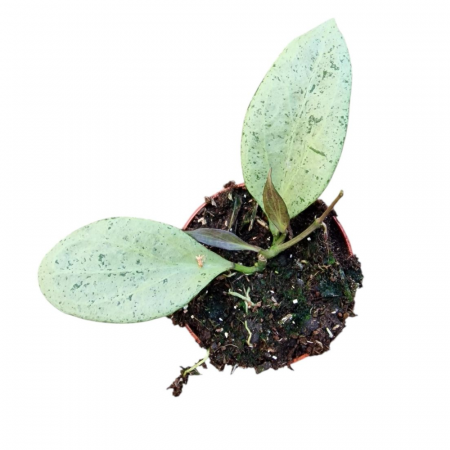
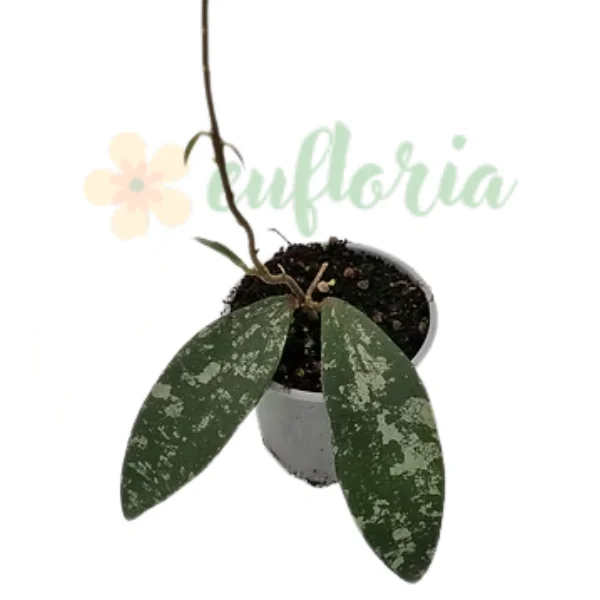
Hoya sp. Padang Sidempuan Ø10.5cm
![Hoya sp Padang Sidempuan in a pot – thick green leaves with silver spots [0]](https://gomagcdn.ro/domains2/eufloria.ro/files/product/medium/hoya-sp-padang-sidempuan-d10-5-898186.jpg "Hoya sp Padang Sidempuan in a pot – thick green leaves with silver spots [0]")
![Hoya sp Padang Sidempuan in a pot – thick green leaves with silver spots [1]](https://gomagcdn.ro/domains2/eufloria.ro/files/product/medium/hoya-sp-padang-sidempuan-d10-5-227384.webp "Hoya sp Padang Sidempuan in a pot – thick green leaves with silver spots [1]")
![Hoya sp Padang Sidempuan in a pot – thick green leaves with silver spots [2]](https://gomagcdn.ro/domains2/eufloria.ro/files/product/medium/hoya-sp-padang-sidempuan-d10-5-856472.webp "Hoya sp Padang Sidempuan in a pot – thick green leaves with silver spots [2]")
![Hoya sp Padang Sidempuan in a pot – thick green leaves with silver spots [3]](https://gomagcdn.ro/domains2/eufloria.ro/files/product/medium/hoya-sp-padang-sidempuan-d10-5-086605.webp "Hoya sp Padang Sidempuan in a pot – thick green leaves with silver spots [3]")
![Hoya sp Padang Sidempuan in a pot – thick green leaves with silver spots [1]](https://gomagcdn.ro/domains2/eufloria.ro/files/product/original/hoya-sp-padang-sidempuan-d10-5-898186.jpg "Hoya sp Padang Sidempuan in a pot – thick green leaves with silver spots [1]")
![Hoya sp Padang Sidempuan in a pot – thick green leaves with silver spots [2]](https://gomagcdn.ro/domains2/eufloria.ro/files/product/original/hoya-sp-padang-sidempuan-d10-5-227384.webp "Hoya sp Padang Sidempuan in a pot – thick green leaves with silver spots [2]")
![Hoya sp Padang Sidempuan in a pot – thick green leaves with silver spots [3]](https://gomagcdn.ro/domains2/eufloria.ro/files/product/original/hoya-sp-padang-sidempuan-d10-5-856472.webp "Hoya sp Padang Sidempuan in a pot – thick green leaves with silver spots [3]")
![Hoya sp Padang Sidempuan in a pot – thick green leaves with silver spots [4]](https://gomagcdn.ro/domains2/eufloria.ro/files/product/original/hoya-sp-padang-sidempuan-d10-5-086605.webp "Hoya sp Padang Sidempuan in a pot – thick green leaves with silver spots [4]")
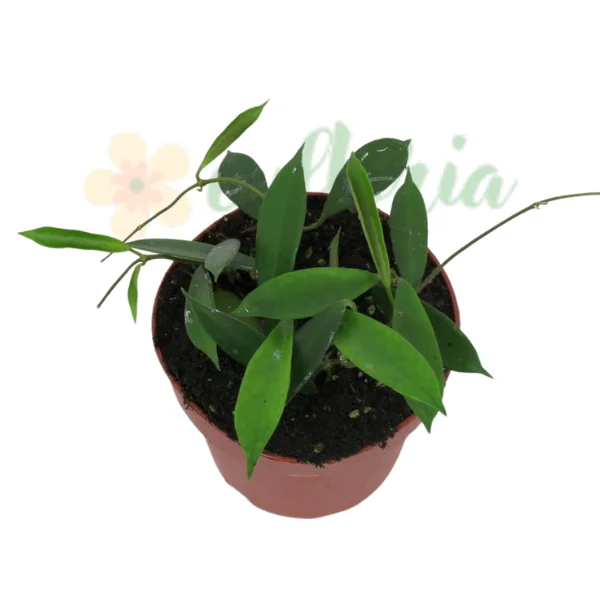
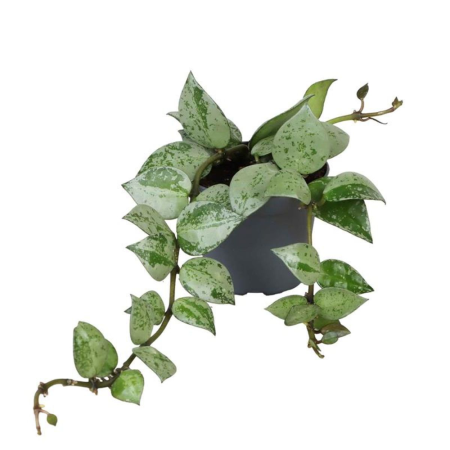
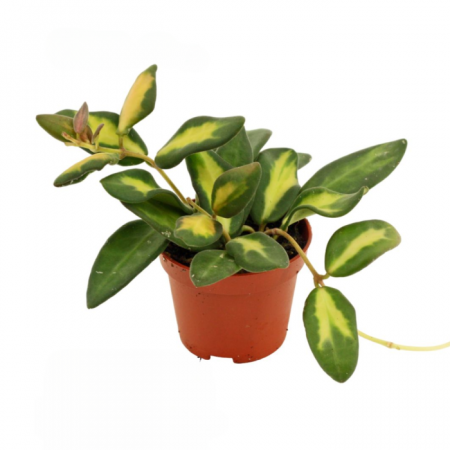
Hoya sp. Padang Sidempuan, native to the Padang Sidempuan region of North Sumatra, Indonesia, is a rare potted houseplant, beloved for its green leaves speckled with silver spots and its fragrant, star-shaped red flowers. This epiphytic Hoya adds an exotic and wild charm to any decor.
Approx height (including pot): 15 cm
Flowering state: No flowers
Country of origin: Netherlands
Pot diameter: 10.5 cm
- Description
- Characteristics
- Reviews (0)
- FAQ
🌿 A Hidden Gem from Sumatra’s Tropical Highlands
Hoya sp. Padang Sidempuan stands as one of the most sought-after unidentified Hoya species in contemporary plant collecting. Named after the city of Padang Sidempuan in North Sumatra, Indonesia, this remarkable epiphyte has captured the imagination of tropical plant enthusiasts worldwide with its extraordinary combination of silver-splashed foliage and deeply pigmented, fragrant flowers. Despite lacking a formal taxonomic description, it has established itself as a cornerstone species in serious Hoya collections across Europe, North America, and Asia.
What sets this species apart from the hundreds of other Hoya species is its dual ornamental appeal. While many Hoyas are prized primarily for either their foliage or their flowers, Hoya sp. Padang Sidempuan delivers exceptional beauty in both categories. The leaves, adorned with scattered silver markings that shimmer like moonlit dewdrops, provide year-round visual interest, while the deep crimson flower clusters offer a spectacular seasonal display accompanied by an intoxicating fragrance that fills entire rooms during evening hours.
For collectors who appreciate botanical rarity and natural beauty, this species represents an extraordinary opportunity to cultivate a living piece of Sumatra’s incredibly rich tropical biodiversity — a plant that science has yet to formally name but that nature has already perfected.
🌍 Origin and Botanical Background
The genus Hoya belongs to the family Apocynaceae (subfamily Asclepiadoideae) and was first described by Scottish botanist Robert Brown in 1810, honouring his friend Thomas Hoy, a gardener at Syon House in England. With over 500 formally described species and potentially hundreds more awaiting description, Hoya represents one of the largest genera of tropical epiphytes. The island of Sumatra, where Hoya sp. Padang Sidempuan originates, is recognised as one of the three primary centres of Hoya diversity in Southeast Asia, alongside Borneo and the Philippines.
Padang Sidempuan itself sits in the Mandailing Natal regency of North Sumatra province, nestled in a valley surrounded by the Bukit Barisan mountain range — a chain of volcanic mountains running the entire length of Sumatra. The region’s elevation of approximately 260–400 metres above sea level, combined with annual rainfall exceeding 2,500 mm and consistently warm temperatures between 24°C and 30°C, creates ideal conditions for epiphytic plant growth. The tropical montane forests in this area harbour an extraordinarily rich flora, with new plant species still being discovered regularly by botanical expeditions.
In its natural habitat, this Hoya grows as an epiphyte on tree trunks and branches in the forest understory and mid-canopy, where it receives dappled light filtered through the overhead canopy. The consistently high humidity (often above 80%) and regular rainfall provide the moisture this species needs, while the bark substrate and accumulated organic debris on branches offer anchorage and nutrients for its adventitious root system.
🌱 The Foliage
The leaves of Hoya sp. Padang Sidempuan are undeniably its primary ornamental feature outside the flowering season. Each leaf is elliptic to ovate-lanceolate in shape, measuring between 8 and 14 cm in length and 4 to 7 cm in width, with a semi-succulent, slightly waxy texture that gives them a subtle sheen when caught by natural light. The base colour is a deep, saturated emerald green that speaks of robust health and vitality.
Scattered across this green canvas are the signature silver markings — irregular patches and flecks of silvery-white that collectors refer to as “splash.” These markings are created by tiny air pockets between the cell layers of the leaf, which reflect light and create a metallic shimmer. The distribution and intensity of these silver patterns vary from leaf to leaf, ensuring that no two leaves on the same plant are identical. Some leaves may display just a few scattered silver dots, while others can be heavily splashed with extensive silver coverage, particularly when the plant receives optimal bright indirect light.
Young leaves emerge with a subtle reddish or bronze tint before gradually transitioning to their mature green coloration as they expand to full size. The leaf margins are entire and gently undulating, with an acute apex that tapers to a fine point. The venation pattern, most visible on the abaxial (lower) surface, consists of a prominent midrib with pinnate secondary veins forming an elegant reticulate network. Short, sturdy petioles of 1–2 cm support each leaf in a slightly arching position that maximises light interception — an adaptation to the dappled light conditions of its forest habitat.
🌸 The Flowers
The flowers of Hoya sp. Padang Sidempuan are nothing short of spectacular and represent one of the most compelling reasons to add this species to any collection. Arranged in pendant umbels containing 15 to 25 individual flowers, each bloom measures approximately 1.5 to 2 cm in diameter and displays a rich, deep red to burgundy coloration with a velvety texture that is almost tactile in its intensity. The five-pointed star shape, characteristic of the genus, is perfectly formed, with reflexed corolla lobes that reveal a contrasting corona (staminal crown) at the centre.
Perhaps the most memorable aspect of the flowering experience is the fragrance. Rich, sweet, and complex, with notes that collectors variously describe as chocolate, vanilla, caramel, and warm spice, the scent intensifies dramatically during the evening and nighttime hours. This crepuscular fragrance pattern is an evolutionary adaptation designed to attract nocturnal pollinators — primarily moths and specialised beetles — in its native forest habitat. A single flowering umbel in full bloom can perfume an entire room, and the fragrance persists throughout the flowering period, which typically lasts 7 to 14 days per umbel.
The peduncles (flower stalks) are persistent and should never be pruned after the flowers fade, as they will produce new flower clusters in subsequent growing seasons. Each successive flowering event adds slightly to the peduncle’s length, creating a visual record of the plant’s blooming history. Under optimal conditions, mature specimens can produce flowers from multiple peduncles simultaneously, creating a truly breathtaking display. First flowering typically occurs 2 to 3 years after establishment, once the plant has developed sufficient vegetative mass and receives adequate light levels.
🌱 Growth Habits and Cultivation
Hoya sp. Padang Sidempuan exhibits a climbing and trailing growth habit typical of epiphytic Hoya species. The stems are slender yet flexible, naturally seeking vertical supports to which they attach using adventitious roots. In cultivation, the plant can be trained on moss poles, trellises, or wooden supports, or allowed to cascade freely from a hanging basket where its trailing stems create an elegant, flowing display. Growth rate is moderate under optimal conditions, with the plant capable of adding 20–40 cm of new growth per active growing season.
Lateral branching occurs naturally as the plant matures, gradually creating a fuller, more impressive specimen over time. Regular gentle pruning of excessively long stems can encourage bushier growth, though care should be taken to preserve any developing peduncles. The adventitious roots that appear along the stems are a sign of healthy growth and should not be removed, as they help the plant absorb moisture and nutrients from the air.
- Light: Bright indirect light is ideal. East or west-facing windows provide optimal conditions. Avoid harsh midday direct sun which can scorch the leaves and bleach the silver markings. Insufficient light will reduce flowering potential and may cause leggy growth with reduced silver patterning.
- Temperature: Optimum range 18°C to 28°C. Tolerates minimum temperatures of 14°C but growth ceases below 12°C. A temperature differential of 5–10°C between day and night can encourage flower bud formation, mimicking the natural conditions of its mountain forest habitat.
- Watering: Allow the substrate to partially dry between waterings. Water thoroughly when the top 2–3 cm of substrate feel dry. Reduce watering frequency significantly in winter when growth slows. Always ensure excess water can drain freely.
- Humidity: Prefers 60–80% relative humidity. Adapts to 40–50% but flowering and growth are optimised at higher levels. Regular misting, pebble trays, or a room humidifier can help maintain adequate humidity levels, especially during winter heating season.
- Substrate: Use an airy, well-draining epiphyte mix: 40% pine bark, 30% perlite, 20% coco coir, 10% activated charcoal. The substrate must allow excellent air circulation around the roots, mimicking the plant’s natural bark-growing conditions.
- Fertilising: During the active growing season (March–September), apply a balanced liquid fertiliser (NPK 20-20-20) diluted to half strength twice monthly. During bud formation, switch to a high-phosphorus formula to support flower development.
- Propagation: Stem cuttings with 2–3 nodes root readily in water, moist perlite, or sphagnum moss during spring and summer. Optimal propagation period: April–July. Ensure each cutting includes at least one healthy leaf node.
Lungime: 10.5 cm
Greutate (kg): 0.5 Kg
Denumire: Hoya
Diametru: 10.5 cm
Cerințe lumină: Strong, indirect light
Tip plantă: Decorative
Utilizare: Interior
Tip suport: Ghiveci
Material Suport: Plastic
Is Hoya sp. Padang Sidempuan a formally described species?
No. It is an undescribed species, and the name is based on its collection location.
What does “sp.” mean in the name?
“Sp.” indicates that the plant belongs to the genus Hoya, but has not yet been officially described or given a scientific species name.
Where does this Hoya originate from?
It is associated with Padang Sidempuan, North Sumatra, Indonesia.
What type of leaves does it have?
Green, firm leaves with natural silvery spots. Exact leaf morphology may vary between plants.
Is this a fast-growing Hoya?
Growth is generally moderate, depending on light, temperature, and overall care.
Are the flowers fragrant?
There is no reliable, consistent information confirming fragrance.
Does it flower easily indoors?
Flowering is possible under good conditions, but it is not considered a fast or easy bloomer.
Is it suitable for hanging pots?
Yes. Its flexible stems make it suitable for hanging pots or small supports.
Is this Hoya considered rare?
It is uncommon in general commerce and is mostly found in specialized Hoya collections.
Ai nevoie și de un ghiveci decorativ?