EN/
EN/ Romana
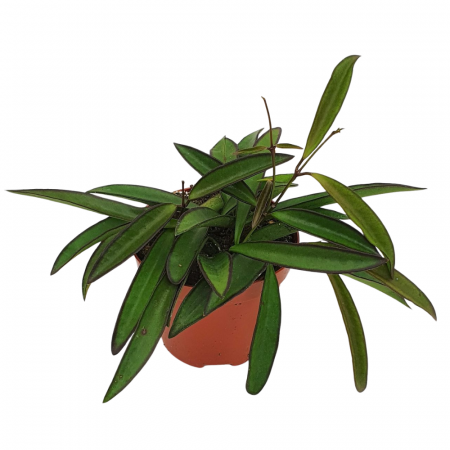
Hoya mindorensis
![Hoya mindorensis with globular umbels of red-burgundy flowers [1]](https://gomagcdn.ro/domains2/eufloria.ro/files/product/original/hoya-mindorensis-915806.png "Hoya mindorensis with globular umbels of red-burgundy flowers [1]")
Hoya mindorensis — Philippine hoya with impressive umbels of 30-50 red-burgundy star flowers with yellow corona. Vigorous vine.
Pot diameter: (no pot)
- Description
- Reviews (0)
- FAQ
🌿 Plant Characteristics
Hoya mindorensis is a climbing epiphyte species from the Apocynaceae family, native to the Philippines, particularly Mindoro Island, which lends its name. It is sought after by Hoya collectors for its densely packed ruby-red flower umbels and supple, elegant leaves.
The leaves are oval-elongated, 8–13 cm long and 3–5 cm wide, of an intensely glossy green. The central vein is slightly recessed and the margins are firm with gentle undulations. Leaf thickness is moderate — not fleshy like other Hoya species, but resilient and durable.
Stems are twining, flexible, with internodes of 4–7 cm. Under good conditions, it produces aerial roots at nodes that anchor the plant to supports — sphagnum moss, cork bark, or wooden trellises. Growth is moderate to fast during the vegetative period.
The flowers are spectacular: compact umbels of 25–40 small flowers (8–10 mm) with ruby-red petals and a white-yellow central corona that creates a striking contrast. The fragrance is sweet, faintly vanilla-like, and stronger at night. Each umbel lasts 5–8 days, and a mature plant can bloom 3–5 times per season.
Mindorensis is considered one of the most photogenic Hoya species, thanks to the strong contrast between its red flowers and glossy green leaves. It suits intermediate-level collectors — not extremely demanding, but rewarding attentive care with generous flowering.
☀️ Light Requirements
Hoya mindorensis prefers bright indirect light or gentle morning sun. Ideal placement is an east-facing window, where it receives 2–4 hours of soft morning sun followed by bright diffused light. A west-facing window with a sheer curtain also works to filter strong afternoon rays.
Light intensity directly influences flowering frequency. A plant in shade or low light will grow slowly and bloom rarely — if at all. For abundant flowering, provide 10–12 hours of bright diffused light daily, including during the cool season, supplemented with LED grow lamps.
Direct midday sun from June through August can scorch the leaves, creating whitish or brown patches. During these months, move the plant 50–100 cm away from the window or install a sheer voile curtain that diffuses light. Optimal lighting is where the leaves shine in a deep green without white or yellow blotches.
Rotate the plant every 2–3 weeks for uniform growth. If you notice stems tilting in one direction, it signals that light is not sufficient from all sides or that the plant is strongly phototropic toward the light source.
💧 Care and Watering
Hoya mindorensis has moderate water needs. Rule: water when 70–80% of the substrate has dried. In summer, this means every 5–8 days; in winter, every 10–16 days. Frequency varies with temperature, humidity, ventilation, and pot type.
Use lukewarm water (20–24°C), filtered or left to decant. Water thoroughly until excess drains through the holes, then drain it away after a few minutes. Never let the plant sit in stagnant water — this is the most common cause of Hoya death.
Ideal ambient humidity is 60–80%. During winter when central heating reduces humidity below 40%, use a humidifier, a pebble tray, or group with other tropical plants. Direct misting of the leaves is not recommended for this species, as it can leave calcium spots.
Fertilize during the growing season (March–October) with a balanced liquid fertilizer (NPK 10-10-10 or 3-1-2), diluted to half strength, every 3–4 weeks. Before flowering, a higher-phosphorus fertilizer (NPK 10-30-20) can help stimulate bud formation. In winter, stop fertilizing.
Stress signs: soft, wrinkled leaves (thirst); yellow, mushy leaves (overwatering); brown tips (hard water or dry air); stretched internodes (insufficient light). Adjust care based on symptoms.
🌡️ Temperature and Climate
Optimal temperatures for Hoya mindorensis are 20–28°C. The plant adapts well to typical apartment warmth, provided it is protected from direct heat sources or cold drafts. The safe minimum is 15°C — below this, growth stops and the plant becomes vulnerable to rot.
Avoid placement near radiators, air conditioners, or windows that open frequently in winter. Hot, dry radiator air rapidly dehydrates leaves, while cold drafts can cause spotting and drop of mature flowering leaves.
Mild day/night fluctuations (4–6°C) are welcome and stimulate flowering. In spring and summer, when nighttime temperatures stabilize above 16°C, the plant can be moved to a semi-shaded balcony. Fresh air and naturally higher humidity visibly improve plant health.
In winter, the plant enters a light rest phase. Reduce watering, stop fertilizing, and keep it at 16–20°C in bright light (including artificial). This period is important for flowering in the following season.
🪴 Pot and Substrate
The ideal substrate for Hoya mindorensis must be airy, slightly acidic, and excellent-draining. Recommended recipe: 40% medium pine bark, 25% perlite, 15% coco fiber, 10% sphagnum, 10% horticultural activated charcoal. This mix holds targeted moisture without suffocating the roots.
Hoya mindorensis flowers better when roots are slightly constrained. Choose modest pot sizes. For a young plant, a 10–12 cm pot is enough for 1–2 years. Repot only when roots fully fill the pot and start emerging from drainage holes.
Terracotta pots are recommended for those prone to overwatering — they evaporate excess moisture faster. Plastic retains more water, suitable for those who forget to water. Either way, drainage holes are required.
Add a 2–3 cm layer of coarse bark or gravel at the pot bottom for additional drainage. After repotting, wait 7–10 days before the first full watering and avoid fertilizing for 4–6 weeks.
Moss poles, wooden trellises, or cork slabs encourage upright growth. Guide stems with soft clips or cotton string. A consistently moist (not wet) moss pole stimulates aerial root growth and improves water and nutrient uptake.
Aerial roots should not be trimmed. They are a natural part of the plant's adaptation to epiphytic life and help anchor it to supports. In time, the plant will form a dense crown of stems and leaves — a true jewel for any collection.
With consistent care, Hoya mindorensis becomes a decorative, floriferous plant that rewards the collector with regular floral displays for many years.
In terms of adaptability, Hoya mindorensis is one of the most accessible colorful-flowered species for collectors who are beginning to familiarize themselves with the Hoya genus. It tolerates minor variations in humidity and temperature without losing leaves or giving up on flowering.
To optimize flowering, pay attention to the peduncles (the stalks that bear the umbels). These are perennial — do NOT cut them after flowers fade, as they will produce new umbels from the same point in subsequent seasons. A mature peduncle can generate repeated flowering for 5–10 years.
Common pests include mealybugs (in leaf axils), spider mites (in dry air), and occasionally aphids. Inspect the plant with a magnifier every 2 weeks. At first signs, apply potassium soap solution or neem oil. Avoid strong chemical insecticides on waxy leaves.
Supplemental vitamins and minerals can stimulate flowering. A monthly treatment with a product rich in potassium and phosphorus (e.g., an orchid fertilizer with NPK 10-30-20) during the warm period is sufficient. Do not overdo it — excessive fertilization produces foliar growth at the expense of flowering.
For the most demanding growers, Hoya mindorensis can be cultivated in a controlled-humidity display cabinet (75–85%), where flowering is more abundant and colors are more vivid. This option is ideal for apartments with low recorded winter humidity.
Keep a plant journal to track watering frequency, fertilization cycles, and flowering dates. Over 1–2 years, this data helps you fine-tune the exact rhythm that works in your specific apartment microclimate, since every indoor environment differs in light intensity, humidity, and temperature variation throughout the day.
Finally, enjoy the spectacle. When Hoya mindorensis blooms, the combination of ruby-red flowers set against deep green glossy leaves is one of the most striking sights in the Hoya world — a well-deserved reward for patient, attentive care.
For collectors who wish to observe the flowering process in detail, watch for bud formation on peduncles from the previous year. Buds appear as small green nodules and develop over 10–20 days until the umbel fully opens. During this interval, keep conditions stable — sudden changes can cause flower abortion.
A less-known aspect: Hoya mindorensis produces sweet nectar on the flowers, visible especially in the evening as small transparent droplets. This nectar can stain surfaces below the plant, so place a tray or cloth if the plant is above valuable furniture.
Seed propagation is rarely practiced indoors, since pollination requires specific habitat pollinators. The standard method remains vegetative cuttings, with a success rate of 80–90% in controlled conditions.
Long-term observation reveals fascinating patterns: mature plants tend to produce more umbels in years following a cooler, drier winter rest. This mirrors the natural rhythm of the Philippine montane forest where the species originates — a dry season followed by the onset of monsoon triggering mass flowering.
When you exchange cuttings with other collectors, document the parent plant's characteristics (leaf size, flower color intensity, umbel density). This kind of tracking builds a valuable community knowledge base and helps identify superior cultivars for propagation.
How do I care for Hoya mindorensis?
Bright indirect light, well-draining substrate, 60-80% humidity, water when 70-80% dry. Temperature: 20-28°C.
Are the flowers really red?
Yes! Hoya mindorensis is renowned for its intense red or orange flowers, among the most vividly colored in the Hoya genus.
Is it toxic?
No, it is non-toxic, safe for pets and children.
When does it bloom?
Requires maturity and optimal conditions. In cultivation, blooming may take several years, but the floral spectacle is worth the wait.
What substrate do you recommend?
Well-draining mix of bark, perlite, and sphagnum. Aerated substrate promotes healthy root growth.
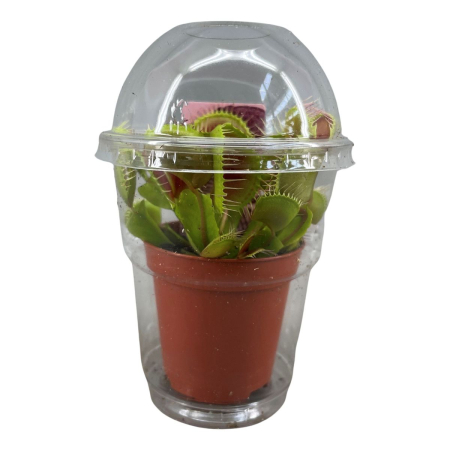
Ai nevoie și de un ghiveci decorativ?