EN/
EN/ Romana
Hoya curtisii Inner Variegated
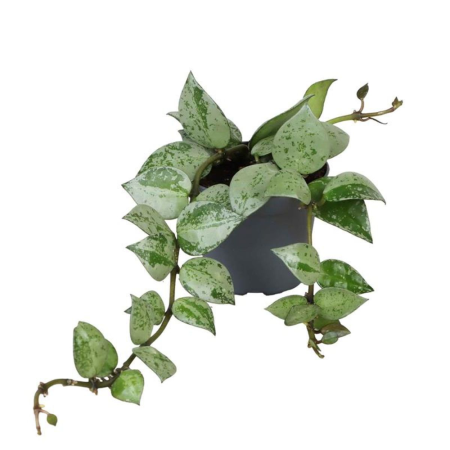
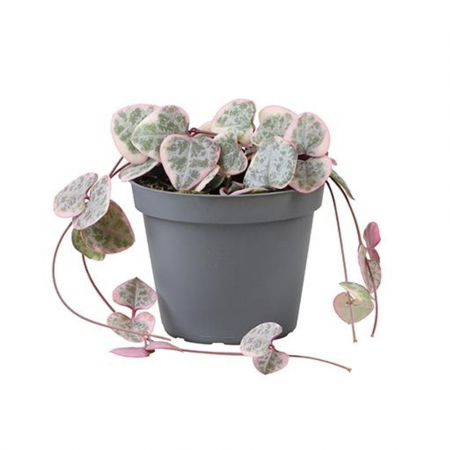
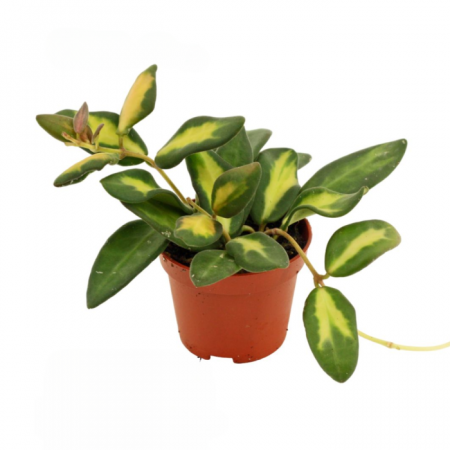
![Hoya curtisii Inner Variegated indoor plant with variegated leaves [1]](https://gomagcdn.ro/domains2/eufloria.ro/files/product/original/hoya-curtisii-inner-variegated-168073.png "Hoya curtisii Inner Variegated indoor plant with variegated leaves [1]")
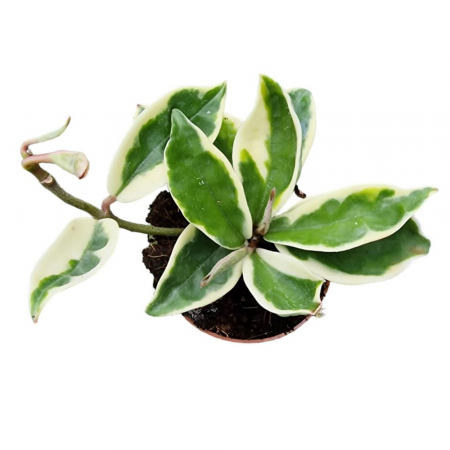
Hoya curtisii Inner Variegated is a rare variant of Hoya curtisii, featuring small heart-shaped leaves with subtle inner variegation — the centre of each leaf is luminous in cream or light green shades, contrasting with the silver-green margins. An elegant collector piece with a compact, trailing habit.
- Description
- Reviews (0)
- FAQ
🌿 The light within the leaf — a subtle variegation that redefines the elegance of miniature
If Hoya curtisii is already recognised as one of the most elegant miniature species in the Hoya genus, the Inner Variegated variant adds a new, almost mystical dimension to that elegance. Each leaf of this rare plant carries a luminous secret at its centre: a zone of lighter green, cream, or pale yellow that gently separates from the silver-green background of the rest of the leaf. This inner variegation effect — unlike white (albo) variegation, which is dramatic and contrasting — is subtle, ethereal, like diffused light captured within a green crystal.
Inner variegation in Hoya curtisii is a rare phenomenon in cultivation. It occurs when meristematic cells at the centre of the forming leaf produce less chlorophyll than those at the margins, resulting in a colour gradient from light (centre) to dark (periphery). Unlike the Albo variant, where the contrast is absolute (pure white vs. green), Inner Variegated offers a gradual, natural transition that gives each leaf the appearance of a jewel illuminated from within. This pattern is more stable than albo — the reversion rate is lower, and inner-variegated leaves maintain a healthy chlorophyll balance, making the plant more vigorous long-term.
At Eufloria, we offer specimens selected for visible, consistent inner variegation on mature leaves. Each plant is unique — the intensity of the central luminosity varies from leaf to leaf, creating a hypnotic effect when viewing along a complete branch. It is the kind of plant that makes you stop, lean in, and admire every detail, discovering new nuances each time.
For Hoya curtisii collectors, the Inner Variegated variant occupies a special place in the triad of variegated variants: between the standard form (uniform silver leaves), the Albo form (dramatic white-green contrast), and the Silver form (intensified silver reflections). Inner Variegated is the poetic variant — it does not shout, but whispers, and its message is equally powerful.
🌍 Origin and botanical history — from the Malaysian jungle to collector shelves
Hoya curtisii was described by Henry Nicholas Ridley in 1908, based on specimens collected by Charles Curtis in the montane forests of peninsular Malaysia. The species grows natively as an epiphyte and lithophyte in Malaysia, Thailand, the Philippines, and western Indonesian islands, at altitudes of 0—800 metres, in zones with constant high humidity and stable tropical temperatures. It is frequently found on moss-covered rocks, old tree trunks, and calcareous surfaces exposed to filtered light.
Taxonomically, Hoya curtisii belongs to the family Apocynaceae, subfamily Asclepiadoideae. It is classified in the group of miniature species alongside Hoya serpens, Hoya engleriana, and Hoya bilobata — species that share the compact habit, small leaves, and preference for similar cultivation conditions.
The Inner Variegated variant was observed and propagated by Southeast Asian cultivators. Stabilising the pattern requires careful vegetative propagation. Interestingly, inner variegation in curtisii tends to be more stable than albo-type, making it a safer choice for collectors who want a variegated plant without the high risk of reversion or loss of non-viable completely white leaves.
🌱 The foliage — silver hearts with captive light
The leaves maintain the species' characteristic form: small (2—3 cm length, 1.5—2.5 cm width), broad heart or spade-shaped, thick and succulent. The upper surface features the emblematic silver pattern — small silver dots and streaks on a green background, giving the impression of stardust-sprinkled leaves. The texture is waxy, firm to the touch, with a slight concavity making each leaf a small natural cup.
What the Inner Variegated variant adds is the luminous centre of each leaf. Unlike the silver pattern (a surface phenomenon caused by air pockets beneath the epidermis), inner variegation is a deep cellular phenomenon: cells at the leaf centre produce less chlorophyll, revealing tones of very light green, cream, or pale yellow. The visual effect is one of "interior light" — as if each leaf were gently illuminated from within, with the centre brighter than the margins.
This double effect — surface silver pattern plus internal central variegation — creates remarkable visual complexity on a leaf of just 2—3 centimetres. Viewed up close, each leaf reveals layers of nuance: metallic silver, medium green, light green, cream — all coexisting harmoniously on a minuscule surface. Compared to Hoya curtisii Albo Variegated, the contrast is softer and more natural. Compared to Hoya mathilde Inner Variegated, the leaves are smaller, flatter, and more strongly silver.
🌸 The flowers — delicate umbels of a botanical miniature
Hoya curtisii produces flowers of exceptional delicacy. Umbels are compact, formed of 10—15 individual flowers each 6—8 mm in diameter. Petals are pale pink to salmon-pink with a matte waxy texture and a darker central corona. The fragrance is subtle, with sweet caramel and vanilla notes, more perceptible in the evening. Each umbel stays open 5—7 days, and a mature plant can produce 3—5 simultaneous umbels during the warm season.
Flowering conditions are classic Hoya: maturity (2—3 years), strong indirect light, winter rest (15—18°C, reduced watering), and preservation of old peduncles. The Inner Variegated variant flowers slightly more slowly than the standard form, but the difference is less pronounced than with the Albo variant.
🌱 Growth habit and development — slow, elegant, and rewarding
The habit is trailing and creeping, with filiform stems producing leaf pairs every 2—3 weeks during the active season. Growth is slow — characteristic of the curtisii species generally, and slightly slower for Inner Variegated due to reduced chlorophyll in leaf centres. Stems can reach 40—80 cm over several years, branching naturally at nodes.
The plant excels in hanging baskets, on high shelves, or on cork bark slabs. An open terrarium with controlled humidity is also excellent — stable conditions allow variegation to express at maximum.
Care requirements:
- Light: Strong indirect — essential for variegation maintenance. East or west window ideal. Insufficient light leads to gradual reversion.
- Temperature: 18—28°C optimal. Not below 12°C. Avoid cold draughts.
- Watering: Substrate nearly completely dry between waterings. Summer: 7—10 days. Winter: 14—21 days.
- Humidity: 60—80% ideal. Humidifier or pebble tray recommended.
- Substrate: Extremely well-draining: pine bark, perlite, coco chips, activated charcoal. Special Hoya substrate recommended. Small pot with generous drainage.
- Fertilising: Balanced liquid at 1/4 strength, every 2 weeks in warm season.
- Propagation: Stem cuttings with 2—3 nodes on moist sphagnum. Rooting: 4—8 weeks. Select stems with visible variegation. Spring is optimal.
How do I maintain inner variegation on Hoya curtisii Inner Variegated?
What is the difference between curtisii Inner Variegated and curtisii Albo?
Is Hoya curtisii Inner Variegated toxic to pets?
What substrate should I use for curtisii Inner Variegated?
Can Hoya curtisii Inner Variegated bloom indoors?
Ai nevoie și de un ghiveci decorativ?