EN/
EN/ Romana
Hoya carnosa AH-074 Silver D7
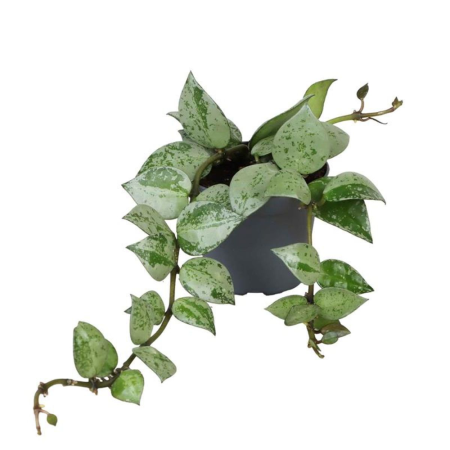
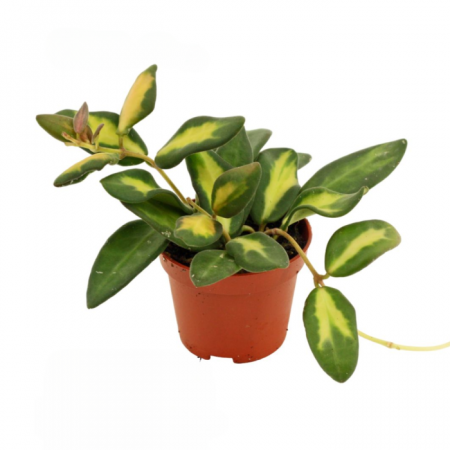
![Hoya carnosa AH-074 Silver with silver variegated leaves in nursery pot [1]](https://gomagcdn.ro/domains2/eufloria.ro/files/product/original/hoya-carnosa-ah-074-silver-d7-898026.png "Hoya carnosa AH-074 Silver with silver variegated leaves in nursery pot [1]")
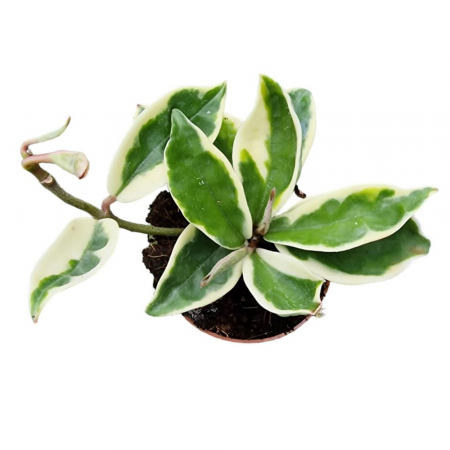
Hoya carnosa AH-074 Silver is a select variety of Hoya carnosa from the Apocynaceae family, noted for its thick, waxy leaves covered in spectacular silver variegation — a “splash” effect that creates unique metallic reflections under natural light. One of the easiest Hoyas to care for, with excellent tolerance for varied light and humidity conditions. Ideal for hanging baskets and tropical plant collections.
Approx height (including pot): 15 cm
Flowering state: No flowers
Country of origin: Netherlands
Pot diameter: 7 cm
- Description
- Characteristics
- Reviews (0)
- FAQ
🌿 Nature's Living Silver
Hoya carnosa AH-074 Silver is a variety that proves nature can be the most refined jeweller. Its leaves — thick, waxy, and covered in spectacular silver variegation — resemble pieces of vegetal silverwork rather than mere photosynthetic organs. Each leaf is a unique surface of metallic reflections that shift subtly with the angle of light, transforming any room corner into a gallery of natural art.
The AH-074 code designates a specific clone from the Antone Hort registry, identified and selected for the exceptional intensity of its silver “splash.” Not all Hoya carnosa Silver are created equal — and AH-074 stands out for the density and uniformity of its variegation, each leaf generously covered with silver patches that cover 50–80% of the leaf surface.
Hoya carnosa is one of the oldest and most popular houseplants in horticultural history. First described by Robert Brown in 1810, this species has been cultivated in European homes for over two centuries. With over 200 registered cultivars according to Kew Royal Botanic Gardens (WCSP), Hoya carnosa remains the reference species of the genus — and the Silver variant elevates this heritage to a superior aesthetic level.
For collectors across Europe, AH-074 Silver offers the perfect combination: the exceptional beauty of silver variegation paired with the legendary robustness of the carnosa species. It is a plant that can be recommended to an absolute beginner and a discerning collector alike — each will find something to admire.
🌍 Origin and Botanical History
Hoya carnosa (R.Br., 1810) is native to East Asia and Australia, with a natural distribution extending from southern China and Japan through India, Myanmar, to Queensland, Australia. The species grows as an epiphyte or lithophyte in tropical and subtropical forests, at elevations from sea level to 1,000 m.
The generic name “Hoya” honours Thomas Hoy (1750–1822), gardener to the Duke of Northumberland at Syon House, England. The epithet “carnosa” (Latin: “fleshy”) describes the thick, succulent texture of the leaves. Botanical synonyms include Asclepias carnosa L.f. and Stapelia chinensis Lour.
The AH-074 Silver variant comes from the selection of clones with intensified silver variegation carried out by Antone Hort, a nursery specialising in Hoya from Asia. The number “074” indicates the position in their clone catalogue, each selected for distinct decorative traits.
In European horticultural history, Hoya carnosa was one of the first tropical plants cultivated on a large scale in apartments, dating back to the Victorian era. Its resilience to indoor conditions and remarkable longevity (specimens over 50 years old are documented) have made it a plant passed down through generations.
🌱 The Foliage — Silver Mirrors on Green Wax
The leaves of the AH-074 Silver variety are the crown jewels of this plant. They measure 5–8 cm in length and 3–5 cm in width, with a thickness of 3–4 mm that gives them that succulent substance which makes them so satisfying to touch. The shape is ovate to elliptical, with an acute tip and rounded base.
The silver variegation is the defining element. The leaf surface is covered in irregular silver patches, randomly but densely distributed, creating a unique metallic “splash” effect. Under natural light, these silvery zones reflect light in a way reminiscent of a mountain lake surface in early morning.
The waxy texture is not merely aesthetic — it is a functional adaptation that reduces evapotranspiration and protects the plant from dehydration. The midrib is slightly prominent, with 3–5 pairs of lateral veins visible by transparency. Margins are entire, slightly revolute.
Young leaves emerge with a delicate pinkish-silver shade, gradually transitioning to the mature silver-green. This chromatic transition adds visual depth, with growing tips always offering a spectacle of fresh colours.
🌸 The Flowers — The Perfect Bouquet of Wax Stars
Hoya carnosa produces some of the most spectacular inflorescences in the entire genus. The spherical umbels comprise 20–40 individual flowers, each a perfect star with five waxy, glossy petals ranging from pale pink to white, with a dark red central corona creating dramatic contrast.
The fragrance is one of this plant's major surprises. The flowers emit a sweet, intense scent with notes of chocolate and vanilla that amplifies significantly after sunset. In an enclosed room, the fragrance can fill the entire space. Each flower secretes visible nectar droplets, glistening like tiny diamonds on the waxy surface.
Peduncles are permanent and must NEVER be cut after flowering. A mature plant of 3–5 years can produce 5–15 umbels simultaneously. The key to flowering: a winter cooling period of 4–6 weeks at 12–15°C, according to the Royal Horticultural Society.
🌱 Growth Habit and Care Guide
Hoya carnosa AH-074 Silver grows as a semi-woody vine, producing long trailing stems that can exceed 3–4 m at maturity. Growth rate is moderate: 30–60 cm of new stems per year, with 4–6 new leaf pairs. It is one of the hardiest Hoyas, tolerating varied indoor conditions with remarkable patience.
Propagation through stem cuttings with 2–3 nodes has a 90–95% success rate according to the RHS. Cuttings faithfully inherit the silver variegation. Rooting takes 3–6 weeks at 22–25°C.
Care requirements:
- Light: Bright indirect (10,000–25,000 lux) for optimal variegation. Tolerates low light (5,000 lux) but with slowed growth.
- Temperature: 18–28°C, optimum 20–26°C. Tolerates down to 7°C briefly. Winter cooling (12–15°C, 4–6 weeks) stimulates flowering.
- Watering: “Soak and dry” method. Summer: every 7–12 days, winter: 14–25 days. Leaves become pliable when thirsty.
- Humidity: 40–60% (very tolerant). Performs excellently in air-conditioned spaces.
- Substrate: 40% pine bark, 30% perlite, 20% coir, 10% charcoal. pH: 5.5–6.5. Prefers being slightly root-bound.
- Fertilising: NPK 20-20-20 diluted, every 2–4 weeks in the warm season.
- Propagation: Stem cuttings 2–3 nodes, 90–95% success. Air layering for mature stems.
Lungime: 15 cm
Greutate (kg): 0.25 Kg
Denumire: Hoya
Diametru: 7 cm
Cerințe lumină: Partial umbra
Tip plantă: Decorative
Utilizare: Interior
Tip suport: Ghiveci
Material Suport: Plastic
How do you maintain the silver variegation on Hoya carnosa Silver?
Is Hoya carnosa AH-074 Silver toxic to cats?
How do you stimulate flowering in Hoya carnosa Silver?
How fast does Hoya carnosa AH-074 Silver grow?
What substrate is recommended for Hoya carnosa Silver?
Ai nevoie și de un ghiveci decorativ?