EN/
EN/ Romana
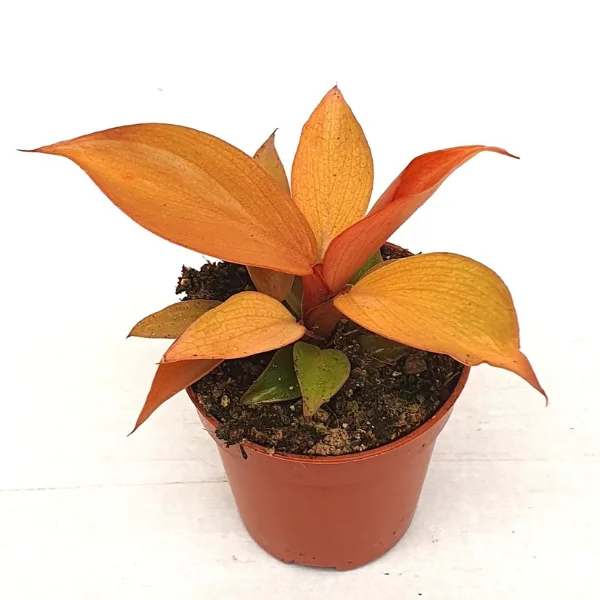
Anthurium 'Queen of Hearts'
![Anthurium 'Queen of Hearts' — velvety dark green heart leaves, Eufloria [0]](https://gomagcdn.ro/domains2/eufloria.ro/files/product/medium/planta-naturala-de-interior-anthurium-queen-of-hearts-035120.png "Anthurium 'Queen of Hearts' — velvety dark green heart leaves, Eufloria [0]")
![Anthurium 'Queen of Hearts' — velvety dark green heart leaves, Eufloria [1]](https://gomagcdn.ro/domains2/eufloria.ro/files/product/medium/anthurium-queen-of-hearts-d9-039111.webp "Anthurium 'Queen of Hearts' — velvety dark green heart leaves, Eufloria [1]")
![Anthurium 'Queen of Hearts' — velvety dark green heart leaves, Eufloria [2]](https://gomagcdn.ro/domains2/eufloria.ro/files/product/medium/anthurium-queen-of-hearts-d9-707861.webp "Anthurium 'Queen of Hearts' — velvety dark green heart leaves, Eufloria [2]")
![Anthurium 'Queen of Hearts' — velvety dark green heart leaves, Eufloria [3]](https://gomagcdn.ro/domains2/eufloria.ro/files/product/medium/anthurium-queen-of-hearts-d9-822038.webp "Anthurium 'Queen of Hearts' — velvety dark green heart leaves, Eufloria [3]")
![Anthurium 'Queen of Hearts' — velvety dark green heart leaves, Eufloria [1]](https://gomagcdn.ro/domains2/eufloria.ro/files/product/original/planta-naturala-de-interior-anthurium-queen-of-hearts-035120.png "Anthurium 'Queen of Hearts' — velvety dark green heart leaves, Eufloria [1]")
![Anthurium 'Queen of Hearts' — velvety dark green heart leaves, Eufloria [2]](https://gomagcdn.ro/domains2/eufloria.ro/files/product/original/anthurium-queen-of-hearts-d9-039111.webp "Anthurium 'Queen of Hearts' — velvety dark green heart leaves, Eufloria [2]")
![Anthurium 'Queen of Hearts' — velvety dark green heart leaves, Eufloria [3]](https://gomagcdn.ro/domains2/eufloria.ro/files/product/original/anthurium-queen-of-hearts-d9-707861.webp "Anthurium 'Queen of Hearts' — velvety dark green heart leaves, Eufloria [3]")
![Anthurium 'Queen of Hearts' — velvety dark green heart leaves, Eufloria [4]](https://gomagcdn.ro/domains2/eufloria.ro/files/product/original/anthurium-queen-of-hearts-d9-822038.webp "Anthurium 'Queen of Hearts' — velvety dark green heart leaves, Eufloria [4]")
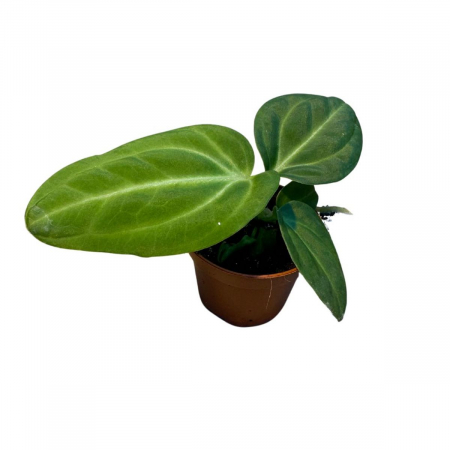
Anthurium 'Queen of Hearts' — cultivar with large dark green velvety heart leaves with prominent veins. Humidity 60-80%, indirect light, 18-26°C.
Approx height (including pot): 20 cm
Country of origin: Netherlands
- Description
- Characteristics
- Reviews (0)
- FAQ
🌿 The Queen of Hearts — a Flamingo Flower With a Regal, Bright Coral-Pink Spathe
Anthurium 'Queen of Hearts' wears its name with fully deserved elegance: its large, heart-shaped spathe, of a warm, bright coral-pink, reigns gracefully among the glossy green leaves, like a true queen of hearts. The glossy, lacquered surface catches the light and makes this warm colour glow, bringing an air of refinement and good cheer to any interior.
Unlike many flowering plants, Anthurium offers an almost permanent spectacle: the glossy spathes last for weeks, and the plant produces new flowers throughout the year in good conditions. The coral-pink of the 'Queen of Hearts' variety is a warm, versatile colour that creates a beautiful contrast with the deep-green foliage and matches a wide variety of decors.
Offered in several pot sizes, it is a well-developed plant with a generous presence, ready to display its flowers. Its healthy, glossy, heart-shaped foliage provides a perfect backdrop for the coral-pink spathes, beautifully setting them off.
For the plant lover seeking a warm, regal colour, long-lasting flowers and easy care, 'Queen of Hearts' is a charming choice — a plant that combines floral beauty with toughness and brings a touch of warm tropical elegance to any space.
🌍 Origin and Botanical History
Anthurium belongs to the Araceae family, the great aroid family that includes philodendrons, monstera and syngonium. The genus Anthurium is the largest in this family, with hundreds of species native to the tropical forests of Central and South America, particularly Colombia and Ecuador, where they grow either as understorey plants or epiphytically on tree trunks.
The genus name comes from the Greek "anthos" (flower) and "oura" (tail), a reference to the elongated spadix that rises from the centre of the inflorescence. What we popularly call the "flower" of the anthurium is not actually a single flower but a compound inflorescence: the coloured, glossy spathe is a modified bract — a transformed leaf — while the true, tiny flowers are grouped on the central spadix.
Modern Anthurium cultivars, such as 'Queen of Hearts', are the result of decades of selection and hybridisation, starting from the species Anthurium andraeanum. Breeders have developed a wide palette of colours and shapes, from classic red to white, pink, mauve and green, as well as more compact and freely flowering plants, perfect for indoor culture. The coral-pink tones are among the most beloved for the warmth and elegance they bring.
Its tropical origin explains all the plant's needs: a preference for constant warmth, high humidity, bright indirect light and an airy substrate that imitates the loose, rich soil of the tropical forest.
🌸 The Flowers
The flowers are, without doubt, the absolute glory of this plant. The spathe — the most visible and spectacular part — is large, heart-shaped, of a warm, bright coral-pink, with a smooth, glossy surface that catches the light like lacquer. From its centre rises the spadix, a contrasting cylindrical stalk bearing the plant's true, tiny flowers.
The great asset of Anthurium flowers is their remarkable longevity: a single spathe can stay beautiful and glossy for weeks, sometimes even over a month, and the plant produces new flowers constantly, offering an almost continuous spectacle throughout the year. In good conditions, you will always have a few flowers open at once.
The coral-pink of the 'Queen of Hearts' variety is a warm, regal colour that brings good cheer and elegance. The contrast between the coral-pink of the spathe and the glossy green of the leaves creates a harmonious, bright chromatic composition, ideal for those who prefer warm yet refined tones.
The cut spathes also last very well in a vase, which is why Anthurium is a flower prized in floral arrangements too. On the plant, however, the flowers are even more beautiful, surrounded by the glossy foliage that sets them off.
🌱 The Foliage and Growth Habit
Alongside its flowers, Anthurium 'Queen of Hearts' also has remarkable decorative foliage. The leaves are large, heart-shaped, of a deep, glossy dark green, carried on long petioles that lift them into a full, orderly clump. This healthy foliage not only sets off the coral-pink of the flowers but is also decorative in itself, giving the plant volume and freshness even between blooms.
The plant grows compactly, developing new leaves and flowers from the centre of the clump. It is a grateful and relatively easy-care plant, suitable both for beginners and for the experienced, as long as it is given warmth, humidity and the right light. With consistent care, it will flower generously, year after year.
- Light: bright, indirect light — essential for abundant flowering; shield it from strong direct sun, which can scorch its leaves and spathes.
- Temperature: prefers 18–27 °C and constant warmth; keep it away from cold below 15 °C and from cold draughts.
- Watering: water when the top layer (2–3 cm) of substrate has dried, maintaining balanced moisture; avoid both complete drying and standing water at the roots.
- Humidity: enjoys high humidity; misting, grouping with other plants or a humidifier keep its foliage healthy and encourage flowering.
- Substrate: an airy, well-draining aroid mix with bark, perlite and coco fibre, providing drainage and aeration at the roots.
- Fertilising: feed every 2–4 weeks in the warm growing season with a balanced, diluted flowering-plant fertiliser; reduce in winter.
- Propagation: by separating the lateral offshoots (pups) that appear at the base of the mature plant, when repotting.
🌸 Symbolism, Use and Air Freshening
Beyond its obvious beauty, the flamingo flower also carries a pleasant symbolic meaning: the heart shape of the spathe has made Anthurium a symbol of hospitality, affection and joy. The coral-pink variety, through its warm, bright tone, is associated with warmth, friendship and gratitude, making it a beloved choice for affectionate gifts.
Besides its decorative and symbolic value, Anthurium is also appreciated as a plant that contributes to fresher indoor air, its generous foliage taking part in the natural exchange of gases in the room. The combination of spectacular flowers, healthy foliage and accessible care makes it one of the most beloved flowering houseplants in the whole world.
Whether you choose it for yourself or as a meaningful gift, 'Queen of Hearts' is a plant that brings colour, warmth and a note of tropical freshness, rewarding minimal care with a long-lasting floral display.
Lungime: 15 cm
Greutate (kg): 0.5 Kg
Denumire: Anthurium
Diametru: 10.5 cm
Cerințe lumină: Partial umbra
Tip plantă: Decorative
Utilizare: Interior
Tip suport: Ghiveci
Material Suport: Plastic
Is 'Queen of Hearts' a species of Anthurium?
Is the exact origin of this cultivar known?
What type of leaves does it have?
Is it a fast-growing plant?
Does it produce decorative flowers?
Does it need strong light?
Is it suitable for beginners?
Is it safe for pets?
How do I care for Anthurium Queen of Hearts?
How often should I water Anthurium?
Is Anthurium toxic to pets?
What substrate should I use for Anthurium?
How do I propagate Anthurium?
Recommendations
Ai nevoie și de un ghiveci decorativ?