EN/
EN/ Romana
Hoya burtoniae Ø14cm
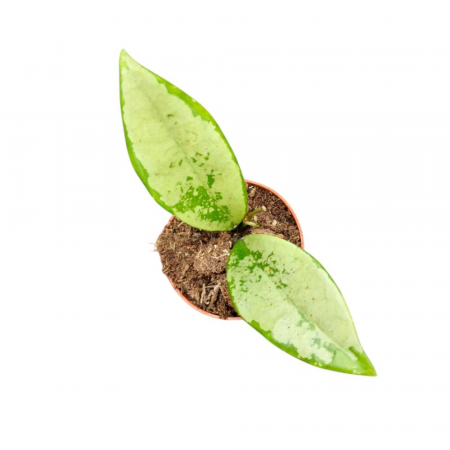
![Hoya burtoniae — wax plant with small velvety green leaves that redden in light and fragrant burgundy-red flowers [0]](https://gomagcdn.ro/domains2/eufloria.ro/files/product/medium/hoya-burtoniae-d14-861511.png "Hoya burtoniae — wax plant with small velvety green leaves that redden in light and fragrant burgundy-red flowers [0]")
![Hoya burtoniae — wax plant with small velvety green leaves that redden in light and fragrant burgundy-red flowers [1]](https://gomagcdn.ro/domains2/eufloria.ro/files/product/medium/hoya-burtoniae-d14-966414.png "Hoya burtoniae — wax plant with small velvety green leaves that redden in light and fragrant burgundy-red flowers [1]")
![Hoya burtoniae — wax plant with small velvety green leaves that redden in light and fragrant burgundy-red flowers [2]](https://gomagcdn.ro/domains2/eufloria.ro/files/product/medium/hoya-burtoniae-d14-594959.png "Hoya burtoniae — wax plant with small velvety green leaves that redden in light and fragrant burgundy-red flowers [2]")
![Hoya burtoniae — wax plant with small velvety green leaves that redden in light and fragrant burgundy-red flowers [1]](https://gomagcdn.ro/domains2/eufloria.ro/files/product/original/hoya-burtoniae-d14-861511.png "Hoya burtoniae — wax plant with small velvety green leaves that redden in light and fragrant burgundy-red flowers [1]")
![Hoya burtoniae — wax plant with small velvety green leaves that redden in light and fragrant burgundy-red flowers [2]](https://gomagcdn.ro/domains2/eufloria.ro/files/product/original/hoya-burtoniae-d14-966414.png "Hoya burtoniae — wax plant with small velvety green leaves that redden in light and fragrant burgundy-red flowers [2]")
![Hoya burtoniae — wax plant with small velvety green leaves that redden in light and fragrant burgundy-red flowers [3]](https://gomagcdn.ro/domains2/eufloria.ro/files/product/original/hoya-burtoniae-d14-594959.png "Hoya burtoniae — wax plant with small velvety green leaves that redden in light and fragrant burgundy-red flowers [3]")
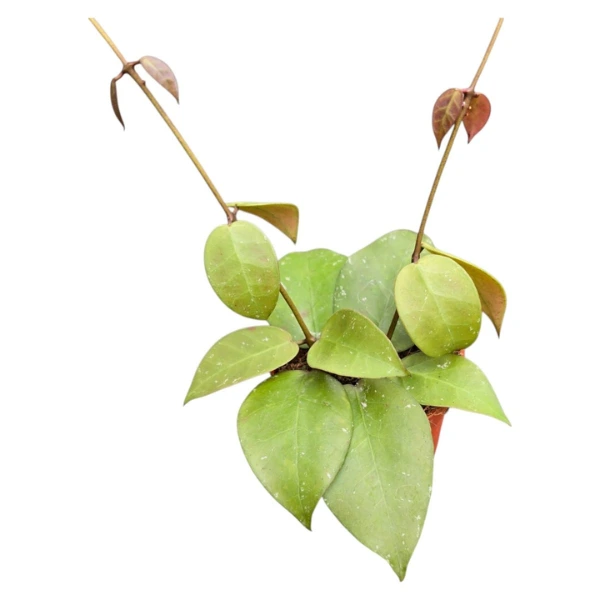
Hoya burtoniae is a compact wax plant from the Apocynaceae family, native to the Philippines, prized for its small, velvety leaves that shift to copper-red under bright light. Its flowers, grouped in umbels of fuzzy burgundy-red stars with a cream centre, give off a sweet caramel fragrance that is stronger in the evening. With fast growth and a trailing habit, it is a Hoya that blooms generously and is easy to care for, ideal for hanging pots.
Pot diameter: 14 cm
- Description
- Reviews (0)
- FAQ
🌿 The Velvety Star That Changes Colour in the Light
Hoya burtoniae is one of those plants that wins your affection slowly, leaf by leaf. At first glance it looks like a modest vine with small, oval, deep-green velvety leaves — but a bright windowsill is all it takes for the plant to reveal its secret: under strong light, the leaf margins gradually turn red, taking on shades of bronze, burgundy and almost chocolate. This phenomenon, known among collectors as “sun stress”, turns an ordinary green plant into a living tapestry of warm colours that shifts from month to month, depending on how generous the light has been.
It belongs to the Apocynaceae family and to the wider group of Hoya plants, also known as “wax plants” because of the texture of their leaves and flowers, which look as though they were modelled from fine wax. Unlike many other houseplants grown for foliage alone, Hoya burtoniae offers two shows in one: foliage that changes colour like a chameleon, and a fragrant, generous bloom that returns year after year on the same peduncles. It is a compact, fast-growing trailing species, ideal for hanging pots, tall planters or shelves where the vines can cascade freely in green-coppery curtains.
It ranks among the easy-care plants, an excellent choice both for beginners wanting their first Hoya and for collectors looking for a rewarding species that blooms early and without special demands. It is precisely this rare combination — striking looks and accessible care — that has made it one of the most sought-after small-leaved Hoyas on the market.
Offered in a 14 cm pot, the plant is already well developed, with branched vines that can be trained on a support hoop or left to cascade. It is a living, expressive plant that responds visibly to care — it “tells” you through the colour of its leaves whether it is getting enough light, and through their firmness whether it needs water. With a little attention, it becomes a lasting companion that ages beautifully and fills out year after year.
🌍 Origin and Botanical History
Hoya burtoniae belongs to the Apocynaceae family, subfamily Asclepiadoideae — the group of wax plants that today numbers more than 500 described species. It is native to the Philippines, to a warm and humid tropical climate, where it grows epiphytically, clinging to tree bark in low- and mid-altitude forests. Like most Hoya species, it is not a parasite: it uses its host tree purely as support, feeding from the air, from rain and from the plant debris collected among its aerial roots. This epiphytic adaptation explains why the plant prefers a very airy substrate and why it cannot tolerate standing water at the roots.
The species was described by the American specialist Dale Kloppenburg, one of the leading authorities on the study of the genus Hoya, well known for classifying numerous species and forms. The epithet “burtoniae” honours an enthusiast of these plants, following the botanical tradition of dedicating species to people who have contributed to their discovery or cultivation. The genus name, in turn, was given in the 18th century in honour of the English gardener Thomas Hoy, head gardener to the Duke of Northumberland.
Hoya burtoniae is often confused with Hoya bilobata, a closely related and very similar-looking species, with which it was long considered synonymous in the plant trade. The real differences are seen in the shape and pubescence of the leaves, in the size of the flowers and in their hue: Hoya burtoniae has flowers of a warmer burgundy red, with more pronounced hairs. This taxonomic confusion is common in the genus Hoya, where many species circulate under unofficial trade names and correct identification is often only possible at flowering.
The genus Hoya is spread across a vast territory, from India and southern China to Australia and the islands of Polynesia, and the Philippine archipelago is one of its richest centres of diversity. Here, conditions of high humidity, constant temperatures and light filtered by the forest canopy have shaped an impressive variety of forms, from species with huge leaves to delicate miniatures like burtoniae.
🌱 The Foliage
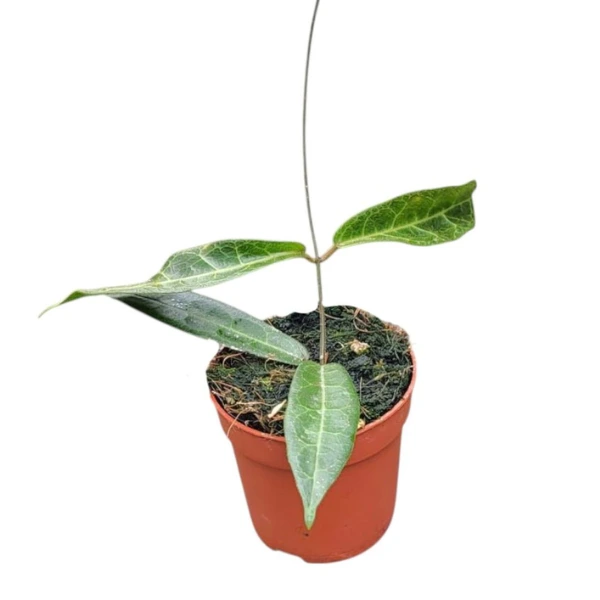
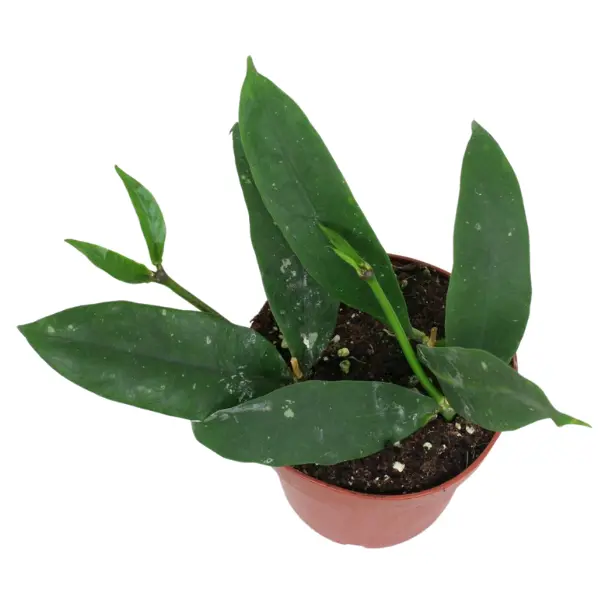
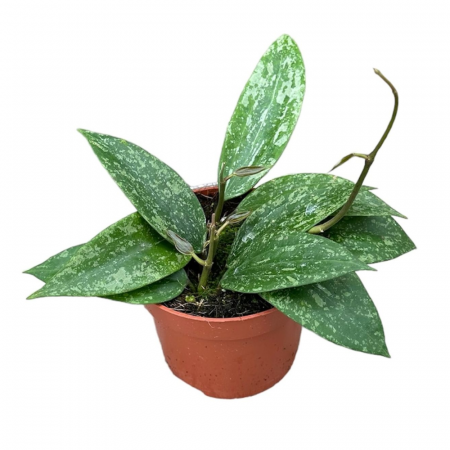
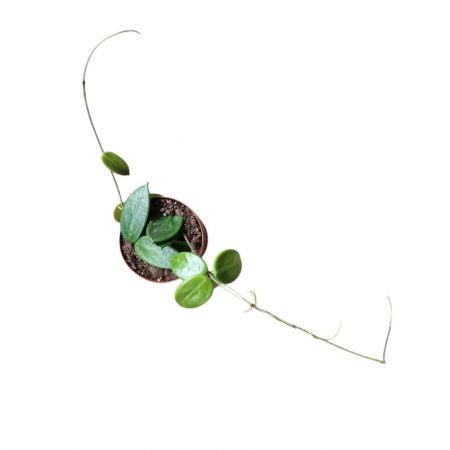
Hoya burtoniae leaves are small, oval and slightly fleshy, usually measuring between 2 and 4 cm long and 1–2 cm wide. Their surface is covered with fine hairs, barely visible to the naked eye, that give them a velvety appearance and a silky texture, pleasant to the touch — completely different from the smooth, waxy shine of species such as Hoya carnosa. On the underside of the leaf, the same fine pubescence catches the light and gives a discreet silvery sheen.
The most striking trait of the foliage, however, is its ability to change colour depending on light intensity. In moderate indirect light the leaves stay a calm olive-green; as the light becomes stronger, the margins begin to colour, and under intense (but filtered) exposure the whole blade takes on copper-red, burgundy and bronze tones. This “sun stress” is completely harmless to the plant — on the contrary, it is a sign that it is receiving exactly the light it needs to bloom. For those who love this play of colour, the variegated form Hoya burtoniae variegata adds a creamy-gold margin which, combined with the red of sun stress, creates a truly dramatic contrast.
The thin, flexible vines grow quickly and branch generously, soon forming a dense crown of foliage that flows elegantly over the rim of the pot. The leaves are set densely, close to one another, which makes the plant look full even when young. Over time, the vines can reach lengths of 60–100 cm, turning the plant into a true living curtain.
🌸 The Flowers
Hoya burtoniae flowers relatively easily and early compared with many other species in the genus, which makes it especially loved by beginners — it often produces its first flower peduncles in the first or second year of cultivation. The flowers appear in spherical umbels of 10–20 individual blooms, each measuring 6–8 mm across, in the shape of a fuzzy star, in a deep burgundy red, with a central crown of yellowish-cream that shines in the middle like a jewel.
The fragrance is one of the great joys of this species: sweet and warm, with notes reminiscent of caramel and chocolate, it becomes stronger in the evening and at night, attracting nocturnal pollinators in the wild. It is a trait it shares with other prized fragrant Hoyas, such as Hoya lacunosa, whose white flowers give off a similar scent. The flowers often also produce a glossy, sweet nectar that gathers in small droplets on the petals — a fascinating and completely natural sight.
One essential care detail: the flowers develop on permanent peduncles (also called spurs) that should never be cut after the flowers fade. These peduncles will produce new umbels in the following seasons, year after year, and cutting them off would mean losing future blooms. To encourage flowering, the plant needs sufficient light, a slightly cooler rest period in winter, and not to be moved too often, as Hoya prefers stability.
🌱 Growth and Development
Hoya burtoniae has fast growth and a trailing habit, making it one of the most rewarding trailing plants for hanging pots. In good conditions it produces new vines throughout the warm season and fills out before your eyes. It can be left to hang freely for a cascade effect, or trained on a support hoop for a compact, tidy look. Unlike the more demanding montane species, burtoniae adapts well to ordinary apartment conditions and is forgiving of small care mistakes.
Like all epiphytic wax plants, it needs above all a very airy substrate and balanced watering that mimics the alternation between rain and dryness of its natural habitat. With these two conditions met, the rest of the care is simple. Here are the essential requirements:
- Light: bright indirect light; a few hours of gentle morning sun intensify the leaf colours and encourage flowering. An east- or west-facing window is ideal. Avoid strong midday summer sun, which can scorch the leaves.
- Temperature: optimal range 18–27°C. Avoid exposure below 12°C and cold draughts from windows or air conditioning.
- Watering: let the substrate dry out 70–80% between waterings — usually every 7–10 days in summer and every 14–21 days in winter. Water thoroughly, then let the water drain completely; never leave the pot standing in water.
- Humidity: 50–70% is ideal, but it also tolerates normal household humidity well. A humidifier or a tray with damp gravel helps produce a richer bloom.
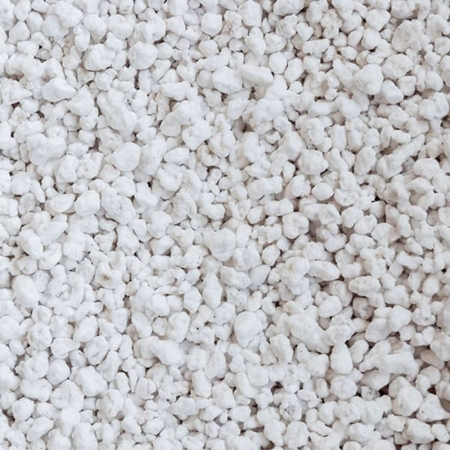
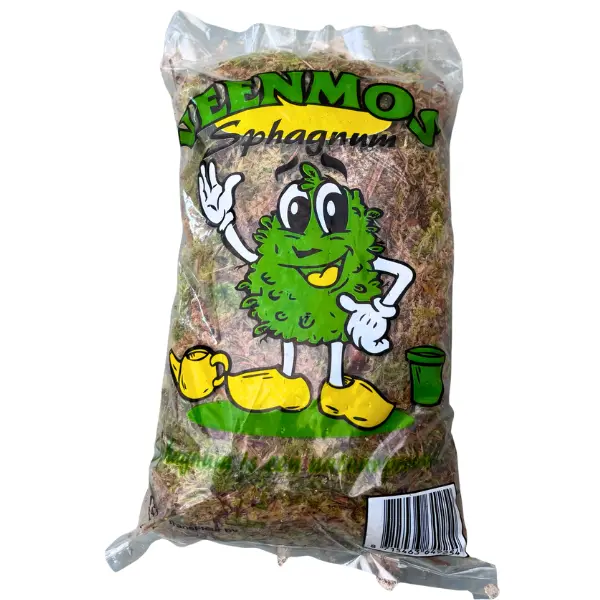
- Substrate: very airy and well-draining — a mix of pine bark, perlite and a little sphagnum is ideal. You can use a specialised mix for Hoyas and aroids.
- Fertilising: diluted liquid fertiliser for green or flowering plants, once every 2–3 weeks during the growing season (spring–summer); stop fertilising in winter.
- Propagation: very easy, by vine cuttings with 2–3 nodes, rooted in water, in moist sphagnum or directly in airy substrate at 22–25°C; roots usually appear in 3–4 weeks.
With these simple conditions, Hoya burtoniae becomes a long-lived, generous plant that rewards patience with ever denser foliage and fragrant blooms that return faithfully every year.
How often should Hoya burtoniae be watered?
Why do the leaves of Hoya burtoniae turn red?
Is Hoya burtoniae toxic to cats and dogs?
What substrate is ideal for Hoya burtoniae?
How is Hoya burtoniae propagated?
Recommendations

Ai nevoie și de un ghiveci decorativ?