EN/
EN/ Romana
Nephrolepis exaltata 'Duffy' Ø6cm
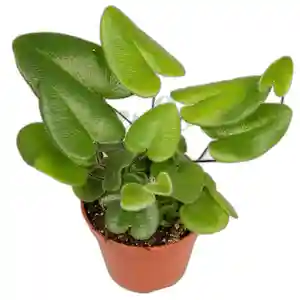
![Nephrolepis exaltata 'Duffy' — compact fern with button-like round pinnae, Ø6cm pot Eufloria [1]](https://gomagcdn.ro/domains2/eufloria.ro/files/product/original/nephrolepis-exaltata-duffy-212143.png "Nephrolepis exaltata 'Duffy' — compact fern with button-like round pinnae, Ø6cm pot Eufloria [1]")
Nephrolepis exaltata 'Duffy' — lemon button fern, compact miniature fern with pinnate fronds decorated with small round button-like pinnae. Cascade 20-30 cm for hanging pots. Non-toxic. Humidity 60-80%, medium indirect light, 16-24°C. Charming choice for fern lovers.
Approx height (including pot): 15 cm
Pot diameter: 6 cm
- Description
- Characteristics
- Reviews (0)
- FAQ
🌿 Green Beads on Dancing Fronds — the Playful Fern With Round Little Leaves
Nephrolepis exaltata 'Duffy' is a charming and unusual fern that gracefully departs from the classic image of ferns with flat, elongated fronds. Instead of the usual fronds, 'Duffy' carries on its thin, arching stems dozens of small, round little leaves, set densely like green beads strung on a thread — a pattern so regular and playful that the plant seems drawn by a child who loves symmetry.
This "beaded" arrangement gives the plant a lively, almost three-dimensional texture and a special charm, slightly retro and nostalgic, recalling grandmother's ferns reinterpreted in a modern, graphic key. Its stems arch and sometimes twist gently, creating a full, frothy silhouette that looks wonderful trailing over the edge of a hanging pot, set on a shelf or nestled in a humid terrarium.
Offered in a 6 cm pot, it is a young plant full of vitality, ready to unfurl ever more delicate fronds. It grows beautifully in good humidity and rewards care with an ever-increasing density of foliage, becoming a small explosion of fresh, textured green.
And, as a precious bonus, 'Duffy' is a non-toxic plant, perfectly safe around curious pets and children — playful greenery you can place without worry anywhere in the home.
🌍 Origin and Botanical History
Nephrolepis exaltata, popularly known as the "Boston fern", belongs to the Nephrolepidaceae family and is one of the most widespread and beloved indoor ferns in the world. The species has a pantropical distribution, found naturally in the humid, warm regions of Florida, Central and South America, Africa and South-East Asia, where it grows on rich soils, in swamps, moist forests and on tree trunks.
Ferns are among the oldest plants on Earth, an ancestral group that appeared hundreds of millions of years before flowering plants. They do not reproduce by seeds but by spores, preserving an ancient mode of reproduction inherited from the time of the primordial forests. This antiquity gives them a special charm: a fern in the home is, in a way, a living window onto the planet's distant past.
The 'Duffy' cultivar is a remarkable horticultural selection of the Boston fern, notable for its small, round little leaves set regularly along the stems — a charming departure from the typically lacy fronds of the species. This compact, orderly form makes it ideal for small spaces, terrariums and plant lovers seeking a fern with a distinct visual character.
The fact that it comes from humid environments explains its most important need: constant humidity. Like all ferns, 'Duffy' longs for the humid air of its native forest and does not tolerate drying out — an essential detail for keeping it dense and healthy at home.
🌱 The Foliage
The foliage is, without doubt, the great attraction of this plant. Each frond is a thin, supple, arching stem, along which dozens of small, rounded little leaves (pinnae) are strung, almost spherical or shell-shaped, set symmetrically on either side of the axis. This regular, "beaded" pattern is the unmistakable signature of the 'Duffy' variety and sets it apart from all other Boston ferns.
The colour is a fresh, vivid green, medium to bright, which on young fronds appears in a lighter, almost lime shade before darkening slightly at maturity. The surface of the little leaves has a fine, slightly glossy texture that catches the light and makes the whole plant seem to shimmer when touched by the gentle rays of morning.
The stems arch gracefully outward and, as the plant grows, they multiply and thicken, creating a full, frothy clump that spills in all directions. Young fronds emerge coiled in a spiral, like tight curls — the classic fern feature known as a "fiddlehead" — and unfurl gradually, revealing their row of green beads in a slow and captivating spectacle of unfolding.
This density and texture make 'Duffy' a particularly prized plant for indoor arrangements, hanging pots and terrariums, where its small, playful foliage creates a lively, dynamic volume that brings movement and freshness wherever it is placed.
🌸 Spores Instead of Flowers
Like all ferns, 'Duffy' never produces flowers or seeds — it is a plant with an ancient biology that reproduces by spores. On the underside of mature little leaves, small dots or round structures, organised in rows and called sori, may sometimes appear — groups of sacs containing the microscopic spores. These are not a disease or a pest but a natural sign of the plant's maturity and health.
For the plant lover, the sori are a fascinating curiosity, a direct window onto one of the oldest modes of reproduction in the plant world. Propagation by spores is, however, a slow and delicate process, rarely attempted in apartment culture — most enthusiasts prefer the far simpler method of clump division.
The ornamental value of this plant therefore lies entirely in its textured foliage and arching, frothy habit. You do not buy it for flowers — which it will never produce — but for the living carpet of green beads it weaves ceaselessly, year after year.
🌱 Growth and Development
Nephrolepis exaltata 'Duffy' is a moderate-growing fern that gradually builds an ever-denser clump, ceaselessly producing new fronds from the centre of the plant and spreading by thin stolons. Its arching, cascading habit makes it ideal for hanging pots, tall stands, shelves or terrariums, anywhere its fronds can hang and dance freely.
Its great need is humidity — both of the air and of the substrate, which it prefers always lightly moist, never bone-dry. In too dry an air, the tips of the little leaves can dry out, so a humid environment is the key to a dense, healthy fern. Otherwise, it is a grateful plant, perfectly safe for pets and children, ideal for bright bathrooms, kitchens and humid corners.
- Light: bright, indirect light; it tolerates partial shade too, but avoid strong direct sun that can scorch its delicate fronds.
- Temperature: prefers 18–24 °C and constant warmth; keep it away from cold below 12 °C and from cold draughts.
- Watering: keep the substrate constantly lightly moist, watering as soon as the top layer begins to dry; never let the plant dry out completely.
- Humidity: essential and high; regular misting, grouping with other plants, a terrarium or a humidifier keep its foliage dense and healthy.
- Substrate: an airy, rich mix that can retain moisture — a quality universal substrate with added coco fibre and perlite is ideal.
- Fertilising: feed every 3–4 weeks in the warm growing season with a balanced, diluted fertiliser; reduce in winter.
- Propagation: most easily by dividing the clump when repotting, carefully separating portions with their own roots and fronds.
Thanks to its fine texture and arching habit, 'Duffy' beautifully complements terrariums and arrangements of humidity-loving plants, being that playful accent of small greenery that enlivens the whole composition.
Lungime: 15 cm
Greutate (kg): 0.1 Kg
Denumire: Feriga
Cerințe lumină: Umbra
Tip plantă: Decorative
Utilizare: Interior
Tip suport: Ghiveci
Material Suport: Plastic
Why is it called 'lemon button fern'?
Is 'Duffy' toxic to pets?
How to water correctly?
Why are fronds drying?
How to propagate?
Ai nevoie și de un ghiveci decorativ?