EN/
EN/ Romana
Asplenium scolopendrium Ø12cm
![Asplenium scolopendrium — hart's tongue fern with long entire (undivided) glossy intense-green lanceolate fronds with wavy edges, native European species [1]](https://gomagcdn.ro/domains2/eufloria.ro/files/product/original/feriga-asplenium-scolopendrium-212496.png "Asplenium scolopendrium — hart's tongue fern with long entire (undivided) glossy intense-green lanceolate fronds with wavy edges, native European species [1]")
Asplenium scolopendrium, the 'hart's tongue fern', is a classic European fern with entire (undivided) fronds — a rarity in the fern world. Long, glossy, intense-green lanceolate leaves with wavy edges. A native species of the temperate zones of Europe, western Asia and North America. Ideal for bathrooms and cool humid spaces.
Pot diameter: 12 cm
- Description
- Reviews (0)
- FAQ
🌿 Asplenium scolopendrium — The Hart's Tongue Fern
Asplenium scolopendrium, popularly known as the "hart's tongue fern", is a classic European fern with long, entire lanceolate fronds — a rarity in the fern world, which usually have pinnate (divided) fronds. The wavy, glossy, intensely green fronds indeed resemble a stylized tongue and give the plant a distinct charm among other indoor ferns.
It is one of the few native ferns from European temperate zones that also adapts to indoor cultivation — higher resistance to temperature variations than many tropical ferns, but with the same need for humidity and moist substrate. The fronds (leaves) can develop up to 30-40 cm in length on mature plants.
At the offered size — Ø12cm pot — the plant is mature, with several fully developed leaves. Perfect for cool, humid spaces — bathrooms, north-facing windowsills, hanging baskets in high-humidity rooms. Excellent combination with other ferns or humidity-loving tropical plants.
🌍 Origin and Botanical History
Asplenium scolopendrium is a species with broad distribution in the temperate zones of the Northern Hemisphere — Europe (including Romania, in the humid Carpathian forests), western Asia and eastern North America. It grows on wet rocks, in the crevices of moss-covered stones, on old wet walls and in the soils of shady calcareous forests.
The species was scientifically described in 1753 by Carl Linnaeus. The genus name — Asplenium — derives from Greek a ("without") + splen ("spleen"), referring to ancient beliefs that these ferns had medicinal properties on the spleen. The epithet scolopendrium derives from the centipede Scolopendra, due to the spores arranged on the underside of the leaves resembling the legs of a centipede.
🌱 The Entire Glossy Fronds
Asplenium scolopendrium fronds are characteristic — lanceolate, long (20-40 cm at maturity), with slightly wavy edges and rounded tips. Unlike most ferns (with fronds divided into leaflets), scolopendrium has ENTIRE, undivided fronds — an atypical trait in the fern world. Color is glossy rich green, with leathery, rigid texture, almost like a leaf of a vascular plant.
In mature plants, parallel lines of spores (sori) appear on the underside of the fronds, crossing the leaf perpendicular to the central vein, resembling the legs of a stylized centipede. These lines become more visible as the spores mature.
🌱 Growth Habit and Care
Asplenium scolopendrium is a deep shade plant, with requirements of high humidity and cooler temperature than most houseplants.
- Light: bright shade or weak indirect. NO direct sun. North-facing windowsill ideal or shaded corners.
- Temperature: 10-22°C ideal — cooler than most tropical ferns. Tolerates 5-25°C. Too warm (above 25°C) causes stress.
- Watering: regular; keep substrate CONSTANTLY moist, but not soggy. DO NOT let it dry out.
- Humidity: 60-80% ideal. Daily misting of fronds beneficial. Perfect for bathrooms with windows.
- Substrate: humus-rich, well-drained, slightly alkaline to neutral (calcicolous ferns) — mix of peat, perlite, activated charcoal and optionally calcium carbonate (Asplenium prefers pH 7-7.5).
- Fertilization: rare (every 6-8 weeks), with fertilizer diluted to a quarter.
- Propagation: by spores (difficult) or by division (simpler).
🌿 Non-toxic
Asplenium scolopendrium is non-toxic for humans and pets. A safe plant in homes with cats, dogs or children.
🌸 Why Choose the Hart's Tongue Fern
Asplenium scolopendrium is the perfect choice for those who want a distinct indoor plant, not an ordinary fern. The entire, glossy fronds offer a graphic, almost architectural appearance. Its resistance to cooler temperatures makes it ideal for unheated spaces in winter, cool bathrooms or north-facing corners where other tropical plants do not thrive.
🌱 The Perfect Plant for the Bathroom
Asplenium scolopendrium is one of the best plants for bathrooms — the high humidity from showering, cooler temperatures and moderate light are exactly what it needs. Place it on a shelf near the window or in a hanging basket above the bathtub. Its glossy fronds fit perfectly with the aesthetics of modern bathrooms, and the constant humidity will maintain it in excellent shape.
🌱 Common Problems
Dry leaf edges: low humidity. Increase humidity, mist daily.
Yellow leaves: overwatering or substrate too acidic.
Slow growth: insufficient light or poor substrate.
Brown patches on underside: these are SPORES, normal on mature plants — a sign of health, NOT disease.
Why are the fronds entire?
It's a rarity in the fern world. Most ferns have pinnate fronds (divided into small leaflets), but Asplenium scolopendrium retains entire, undivided leaves. This trait makes the plant unique — it looks more like a flowering plant than a classic fern.
Is it suitable for bathroom?
PERFECT for bathrooms. Loves high humidity (60-80%) and cooler temperatures (10-22°C) — exactly the conditions of a bathroom with a window. Shower steam, moderate light and cooler temperature are ideal. The glossy fronds also fit aesthetically with modern bathrooms.
What are the brown patches on the underside?
These are SPORES — normal reproductive structures on mature ferns. Arranged in parallel lines perpendicular to the central vein, resembling the legs of a centipede (hence 'scolopendrium'). NOT disease — it is a SIGN OF HEALTH and maturity. DO NOT remove them.
Is it toxic?
No. Asplenium scolopendrium is non-toxic for humans and pets. A safe plant in homes with cats, dogs or curious children.
What substrate should I use?
Asplenium scolopendrium is calcicolous — prefers slightly alkaline substrate (pH 7-7.5). Ideal mix: peat + perlite + activated charcoal + a little calcium carbonate (for alkalinity). Humus-rich, well-drained but retains moisture. Avoid acidic substrates for ericaceous plants (rhododendrons, azaleas).
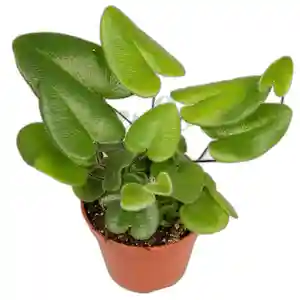
Ai nevoie și de un ghiveci decorativ?