EN/
EN/ Romana
Yucca elephantipes Ø17cm
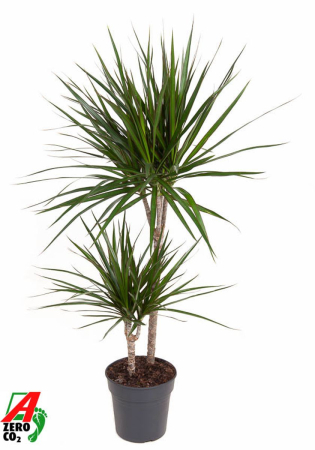
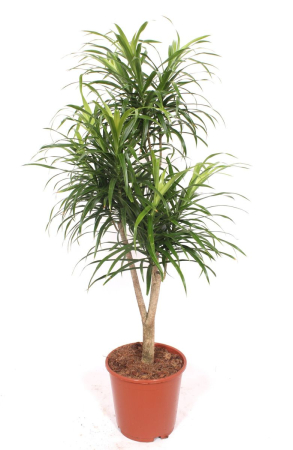
![Yucca elephantipes - Spineless Yucca, resilient indoor plant [1]](https://gomagcdn.ro/domains2/eufloria.ro/files/product/original/yucca-elephantipes-d17cm-eufloria-087142.jpg "Yucca elephantipes - Spineless Yucca, resilient indoor plant [1]")
Yucca elephantipes (spineless yucca) – an imposing indoor plant with a woody trunk and long, rigid, dark green leaves. Extremely resilient, tolerates drought and bright light. Minimal care, ideal for modern interiors. Note: may cause irritation to pets if ingested.
This plant will be imported after you order. It has a minim mandatory quantity.: If you want to order fewer quantities, contact us for a personalized offer
Delivery date: 1-2 weeks
- Description
- Characteristics
- Reviews (0)
- FAQ
🌵 Yucca elephantipes — Desert Strength and Elegance for Your Home
Yucca elephantipes, also known as the Spineless Yucca or Giant Yucca, is an indoor plant with a powerful character and an imposing visual presence. Its woody, robust and sculptural trunk supports dense bundles of long, rigid and sharp leaves in deep green, radiating outward in rosettes like a burst of plant energy. It is the perfect choice for those who appreciate minimalist, architectural aesthetics and are looking for a vegetal element that brings verticality and strength into a modern space.
This plant is the very embodiment of resilience — adapted to extreme conditions in its native habitat, it brings the same unconditional vigor into your home. Yucca elephantipes survives where other plants fail: in dry spaces, less illuminated corners, and sporadic watering regimes. It is the ideal pick for anyone seeking a large, exotic-looking plant with minimal care requirements, perfect for spacious hallways, bright living rooms, or corporate reception areas.
In a decorative context, Yucca elephantipes works as a living sculpture — its contrasting silhouettes, thick trunks and sword-shaped green leaves provide a striking counterpoint to the clean lines of contemporary furniture. It is a statement plant, marking a space without overwhelming it, an elegant presence that endures for decades with minimal care.
🌍 Origin and Natural Habitat
Yucca elephantipes, now more accurately known as Yucca gigantea in modern botanical literature, belongs to the Asparagaceae family, subfamily Agavoideae — the same family that includes agaves, dracaenas and sansevierias. The Yucca genus comprises approximately 50 species distributed across Central America, Mexico and the southwestern United States, all adapted to arid, sunny climates with limited rainfall.
The specific epithet elephantipes refers to the thickened base of the mature trunk, which grows to resemble an elephant's foot — an evolutionary adaptation designed to store water and anchor the plant in rocky, volcanic soils. In its native habitat — the savannas and semi-arid zones of southern Mexico, Guatemala, Belize and Honduras — this species can reach heights of 8–10 meters and forms dense thickets lit by intense tropical sunlight.
Culturally, Yucca holds an ancestral value in Mesoamerica: its leaves were used by the Maya and Aztec peoples to produce textile fibers, cords and mats, while its edible white flowers appeared frequently in ceremonial rituals and traditional cuisine. In the 19th century, Yucca was introduced to Europe as an ornamental plant and quickly conquered Victorian collections thanks to its exotic appearance and remarkable resilience to the indoor conditions of the time.
In contemporary indoor settings, this species manages to preserve its wild character intact — it demands no pampering, tolerates no excess moisture, and rewards those who respect its natural rhythm with impressive longevity. A well-tended plant can live for decades and becomes, over time, a true member of the family.
🌱 Care Guide
Light: Yucca elephantipes is a light-loving plant. Position it in a spot with direct sun exposure for several hours a day, or with very bright indirect light. Without sufficient light, the leaves lose their tone, become softer and pale green, and growth halts. A south- or west-facing window is the ideal position. Yucca also tolerates light filtered through curtains, but avoid dark corners and rooms without windows.
Watering: Dry regime. Water only when the soil has completely dried to a depth of 3–5 cm — for larger variants, 5–7 cm. In the warm season (spring–summer) water once every 10–14 days, and in winter reduce to once every 3–4 weeks. Excess water is the Yucca's main enemy: it quickly causes root rot, manifested by softening of the trunk base and yellowing of the leaves from the bottom up. If you notice these signs, stop watering completely and inspect the roots.
Temperature: Wide tolerance range — between 10°C and 30°C. Avoid temperatures below 7°C and cold drafts from open windows in winter. In summer it can be placed on a terrace or balcony, but adaptation to direct sunlight should be done gradually to prevent leaf burn.
Humidity: No need for high humidity — thrives perfectly in the dry air of winter-heated homes. Do not mist the leaves, as water accumulating between them can cause spots and rot.
Soil: Excellent drainage is essential. A blend of universal indoor potting soil combined with coarse sand or perlite in generous proportions (1:1 or even 1:2) is ideal. Avoid compacted soils that retain water. Alternatively, commercial cactus and succulent mixes work perfectly.
Fertilization: Modest. A balanced fertilizer (NPK 10-10-10), diluted and applied once a month between April and September, is sufficient. In winter, stop fertilization entirely — the plant enters a semi-dormant period and does not use additional nutrients.
Repotting: Every 2–3 years in spring, into a pot 2–3 cm larger in diameter. Yucca does not appreciate frequent repotting — it prefers to expand its roots slowly. Always check the drainage of the new pot and use fresh substrate.
Propagation: Through stem cuttings or by separating lateral offsets. Trunk sections can be rooted directly in moist perlite or in a very well-draining mix at 22–25°C.
🌸 Benefits and Decorative Use
Yucca elephantipes is an efficient air-purifying plant, recognized in NASA studies for its ability to remove volatile organic compounds such as benzene, formaldehyde and trichloroethylene from indoor atmospheres. Its thick, waxy leaves absorb pollutants and release oxygen, contributing to cleaner air, especially in offices, spaces with new furniture or freshly painted rooms.
Its sculptural presence makes it a natural focal point in any room, bringing a note of exotic character and vibrant energy. It is perfect for spacious hallways, bright living rooms, offices, receptions and commercial spaces. Larger variants (D21, D31) are ideal as statement plants beside sofas or in strategic corners, while compact variants (D17, D19) suit coffee tables, cabinets or the space next to windows.
In minimalist, modern or Scandinavian-inspired interiors, Yucca works as a vegetal counterpoint — its straight lines and rigorous silhouette complement geometric furniture perfectly. In eclectic or bohemian interiors, it adds a note of tropical drama and exotic flair. It is, without doubt, one of the most versatile decorative plants available on the market.
From a feng shui perspective, Yucca is considered a plant of prosperity and resilience — said to absorb negative energies and bring stability to homes. Whether you credit these beliefs or not, the psychological effect of a large and healthy plant is real and well-documented: it reduces stress, improves concentration, and creates an overall sense of well-being.
🌱 Product Specifications
Scientific name: Yucca elephantipes (syn. Yucca gigantea)
Family: Asparagaceae
Origin: Mexico, Guatemala, Central America
Plant type: Evergreen woody shrub
Light: Direct or very bright indirect
Watering: Infrequent, let soil dry completely
Temperature: 10–30°C
Humidity: Low (30–50%)
Toxicity: Mildly toxic to pets (saponins)
Benefits: Air-purifying, statement decor, drought-resistant
Note: Yucca elephantipes is a living plant and the exact appearance of each specimen may vary slightly from the images shown. Each plant is unique in the shape of its trunk, the number of rosettes, and the arrangement of its leaves.
Denumire: Yucca
Tip plantă: Decorative
Utilizare: Interior
Tip suport: Ghiveci
Material Suport: Plastic
What light does Yucca elephantipes need?
Yucca elephantipes is a light-loving plant that prefers direct sun and bright light. This is one of the few indoor plants that does exceptionally well in front of a south-facing window, receiving direct sunlight for several hours a day. In bright light conditions, the plant grows vigorously and develops leaves of an intense green color. It can also tolerate moderate or indirect light, but growth will be slower and leaves may become thinner and paler. In low light conditions, the plant survives but does not thrive – avoid placing it in dark corners or rooms without windows. Periodically rotating the pot ensures even growth.
How often should I water Yucca elephantipes?
Yucca elephantipes is a drought-tolerant plant that requires moderate watering. Allow the soil to dry out completely between waterings – usually every 1-2 weeks in summer and every 3-4 weeks in winter. The thick trunk functions as a water reservoir, storing moisture for dry periods. Overwatering is the most common mistake and can lead to root and trunk rot – a serious problem that can be fatal for the plant. When you water, water thoroughly and let the water drain completely through the drainage holes. Never let the pot sit in standing water. Yellow leaves at the base or a soft trunk are clear signs of overwatering. It is always better to underwater than overwater – Yucca recovers more easily from drought than from flooding.
Is Yucca elephantipes toxic to pets?
Yes, Yucca elephantipes is toxic to cats and dogs. The plant contains saponins, natural compounds that can cause gastrointestinal irritation if ingested, including vomiting, diarrhea, and excessive salivation. The sharp leaves can also cause mechanical injuries if pets chew on them. Although toxicity is considered moderate and rarely life-threatening, it is recommended to position the plant in a location inaccessible to curious pets. If you suspect your pet has ingested parts of the plant, contact your veterinarian immediately. For humans, the plant has low toxicity, but it is not edible and may cause mild skin irritation in sensitive individuals.
How tall does Yucca elephantipes grow indoors?
Indoors, Yucca elephantipes can reach heights of 1.5-2.5 meters, depending on growing conditions and pot size. In its natural habitat in Mexico and Central America, it can grow up to 9-10 meters. The growth rate is moderate – under good light and care conditions, the plant can add 20-30 cm per year. The trunk gradually thickens with age, developing a solid base that supports the crown of leaves. You can control the height by cutting the trunk – Yucca handles pruning excellently and will produce new branches from the cutting point. Repotting into a larger pot encourages growth, while keeping it in a smaller pot naturally limits it.
Why are the leaves on my Yucca elephantipes turning yellow or brown?
Yellowing and drying of leaves on Yucca elephantipes can have several causes. Lower leaves that turn yellow and drop are a natural process – the plant sheds old leaves as it grows, revealing the trunk. This is not a problem. If leaves are yellowing massively or at the tips, the main cause is usually overwatering, which leads to root rot. Check the soil – if it is constantly moist, reduce watering frequency. Brown tips may indicate air that is too dry or mineral salt buildup from water. Pale or thin leaves suggest insufficient light. Brown spots on leaves may be sunburn if the plant was suddenly moved to direct sun. Correcting the watering regime and ensuring adequate light resolves most problems.
What soil and pot is suitable for Yucca elephantipes?
Yucca elephantipes requires soil with very good drainage, similar to that used for cacti and succulents. An ideal mix combines universal potting soil with perlite, coarse sand, or pumice in a ratio of approximately 2:1. The soil should be light and airy, allowing water to drain quickly – Yucca roots do not tolerate standing moisture. The pot must have adequate drainage holes. Choose a stable and sufficiently heavy pot to support the plant, as large specimens can become unstable. Terracotta is an excellent choice – the porous material helps the soil dry faster. Repotting is done every 2-3 years or when roots fill the pot, preferably in spring. Choose a pot only 2-3 cm larger in diameter than the previous one.
How big does Yucca grow indoors?
Yucca elephantipes can reach 1-2 m indoors. It has a thick trunk and sharp sword-shaped leaves that give it an imposing tropical look.
Ai nevoie și de un ghiveci decorativ?