EN/
EN/ Romana
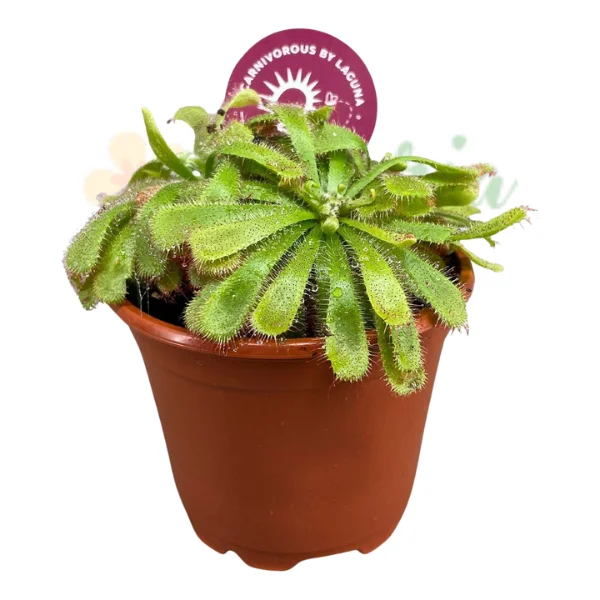
Dionaea muscipula Ø8.5cm
![Venus Flytrap – Cea mai faimoasă plantă carnivoră din lume [1]](https://gomagcdn.ro/domains2/eufloria.ro/files/product/original/dionaea-muscipula-d8-5-898201.webp "Venus Flytrap – Cea mai faimoasă plantă carnivoră din lume [1]")
Dionaea muscipula (Venus Flytrap) is the world's most famous carnivorous plant, with toothed traps that snap shut on contact. Native to the USA, it prefers strong direct light, moist substrate, and distilled water. Requires winter dormancy. Non-toxic plant, fascinating for all ages.
Approx height (including pot): 7 cm
- Description
- Characteristics
- Reviews (0)
🌿 Dionaea muscipula – The Venus Flytrap, Queen of Carnivorous Plants
Dionaea muscipula, commonly known as the Venus Flytrap, is the most famous carnivorous plant in the world. Its toothed traps that snap shut upon touch fascinate children and adults alike. It is a unique plant with an active trapping mechanism unparalleled in the plant kingdom.
🌍 Origins & Botanical History
Dionaea muscipula belongs to the Droseraceae family and is native to an extremely restricted area in North Carolina and South Carolina, United States, where it grows in acidic, nutrient-poor bogs. It was described by John Ellis in 1768, and Charles Darwin called it "the most wonderful plant in the world." It is the only species in the genus Dionaea, making it truly unique in botany.
🌿 Traps – Green Jaws with Red Teeth
The traps of Dionaea muscipula consist of two hinged lobes bordered by long, rigid teeth. The interior of the lobes can be green or intensely red, depending on light exposure, and contains sensory hairs (trichomes). When an insect touches two sensory hairs within 20 seconds, the trap snaps shut in less than one second. The interlocking teeth form a cage from which the insect cannot escape. Digestion takes 5-12 days, after which the trap reopens.
🌱 Growth Habit & Development
Dionaea muscipula is a compact perennial plant that forms a rosette of radially arranged traps. It prefers strong direct light (minimum 4-6 hours daily), constantly moist substrate of peat and perlite, and exclusively distilled or rainwater. It requires a dormancy period in the cool season (5-10°C / 41-50°F, 2-3 months) for healthy growth. Do not fertilize or force-feed – the plant captures insects on its own as needed.
Lungime: 8 cm
Greutate (kg): 0.25 Kg
Denumire: Dionaea
Diametru: 8.5 cm
Cerințe lumină: Partial umbra
Tip plantă: Decorative
Utilizare: Interior
Tip suport: Ghiveci
Material Suport: Plastic