EN/
EN/ Romana
Sarracenia purpurea venosa 'Sylwia' Ø8,5cm
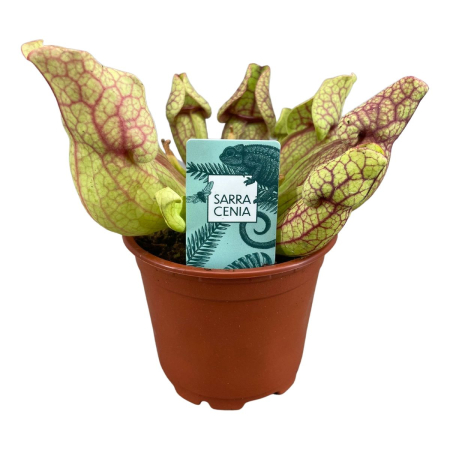
![Sarracenia purpurea venosa 'Sylwia' — green pitchers with purple veins, pot Ø 8.5 cm [1]](https://gomagcdn.ro/themes/fashion/gfx/no-image.png "Sarracenia purpurea venosa 'Sylwia' — green pitchers with purple veins, pot Ø 8.5 cm [1]")
Sarracenia purpurea venosa ‘Sylwia’ – a carnivorous plant with cup-shaped traps and intense purple veining. Passively captures insects through water accumulation. Requires direct light, acidic substrate, and distilled water. Cold-hardy. Non-toxic plant.
Pot diameter: 8.5 cm
- Description
- Reviews (0)
- FAQ
🌿 Sarracenia purpurea venosa ‘Sylwia’ – The Carnivorous Plant with Purple Traps
Sarracenia purpurea venosa ‘Sylwia’ is a spectacular variant of the carnivorous Sarracenia, noted for its intensely purple-veined traps and dramatic colouration. Unlike other Sarracenias with upright traps, Sarracenia purpurea has shorter, wider traps that sit horizontally or slightly tilted, collecting rainwater – a unique capture mechanism in the carnivorous plant world. The ‘Sylwia’ variety is distinguished by its particularly intense colouring.
🌍 Origins & Botanical History
Sarracenia purpurea is the most widespread Sarracenia species, native to eastern North America, from Canada to Florida. It belongs to the Sarraceniaceae family. The subspecies venosa is native to the southeastern US, in acidic bogs and wetlands. It is the only Sarracenia species extending into Canada, demonstrating remarkable cold hardiness.
🌿 The Traps – Purple Cups Full of Mystery
The ‘Sylwia’ traps are short, wide, and cup-shaped, with a lid that doesn’t fully cover the opening, allowing rainwater to accumulate. The veins are intensely purple, contrasting with green or reddish zones. Insects are attracted by nectar on the rim, slip into the liquid in the cup, and are digested by enzymes and microorganisms. It is a passive and elegant capture method.
🌱 Growth Habit & Development
Sarracenia ‘Sylwia’ grows in a rosette, with traps of 10–20 cm. It requires abundant direct light, acidic substrate (peat and perlite), distilled or rainwater, and substrate kept consistently moist. In winter, it enters dormancy requiring low temperatures (0–10°C) – it is more cold-hardy than most carnivorous plants.
How do I care for Sarracenia purpurea venosa 'Sylwia'?
Sarracenia purpurea needs strong direct light (minimum 6 hours daily), a peat and perlite substrate, and distilled or rainwater. Keep a water tray under the pot permanently. Never fertilize. It is the most cold-hardy Sarracenia and requires a winter dormancy period at 2-10°C (35-50°F) for 3-4 months.
Is Sarracenia purpurea toxic to pets?
No, Sarracenia purpurea is considered non-toxic to dogs and cats. Carnivorous plants of the Sarracenia genus do not contain substances toxic to mammals. Their passive traps are designed only to attract and digest small insects.
Can Sarracenia purpurea withstand cold temperatures?
Yes, Sarracenia purpurea is the most cold-hardy of all Sarracenia species. It can tolerate temperatures as low as -20°C (-4°F) and even lower. In fact, it requires a winter dormancy period at low temperatures (2-10°C / 35-50°F) for 3-4 months to thrive. It can be grown outdoors year-round in Romania.
How does Sarracenia purpurea catch insects?
Sarracenia purpurea has passive traps in the form of squat, bulbous pitchers. Insects are attracted by the nectar and vivid colours on the pitcher rim. Once inside, the slippery interior walls and downward-pointing hairs prevent escape. Insects drown in the liquid inside the pitcher and are slowly digested with the help of enzymes and bacteria.
What makes the 'Sylwia' cultivar special?
The 'Sylwia' cultivar stands out for its exceptional trap coloration, featuring intense red-purple hues with pronounced veining. This cultivar was selected for superior vigor and resistance to European climatic conditions, making it more adaptable than the typical species form.
What water should I use for carnivorous plants?
Use only distilled, demineralized, or rainwater. Tap water contains minerals that can kill carnivorous plants. Keep the substrate permanently moist.
Do I need to feed my carnivorous plant?
It is not necessary to actively feed the plant. It will catch insects on its own if available. Do not give meat or other food - only small live insects, occasionally.
Does the carnivorous plant need winter dormancy?
Yes, many carnivorous plants need a winter dormancy period at lower temperatures (5-10°C). This is essential for long-term health.
What substrate for carnivorous plants?
Use a mix of sphagnum peat and perlite (1:1). Do not use regular soil or compost - minerals are harmful to carnivorous plants.
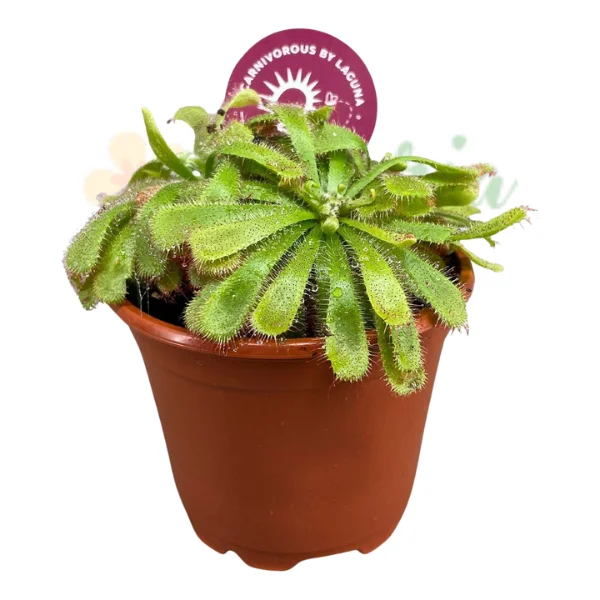
Ai nevoie și de un ghiveci decorativ?