EN/
EN/ Romana
Anthurium balaoanum Ø6cm
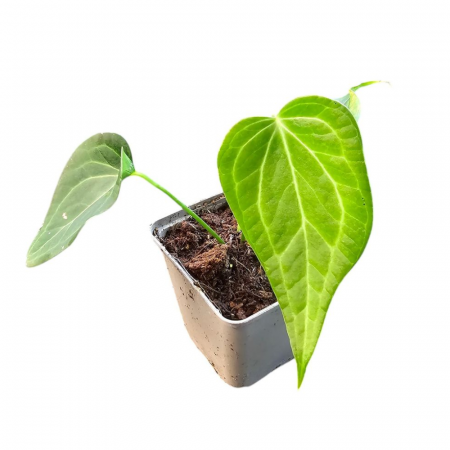
![Anthurium balaoanum — pendant lanceolate green leaves with whitish vein, Ø6cm pot Eufloria [0]](https://gomagcdn.ro/domains2/eufloria.ro/files/product/medium/anthurium-balaoanum-890277.png "Anthurium balaoanum — pendant lanceolate green leaves with whitish vein, Ø6cm pot Eufloria [0]")
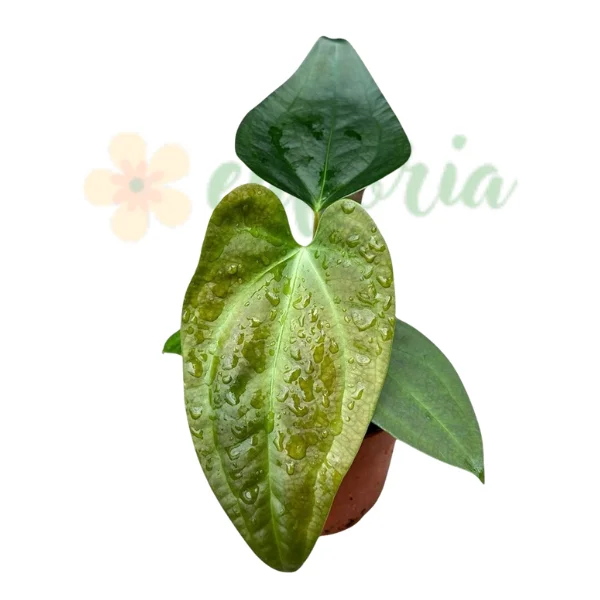
![Anthurium balaoanum — pendant lanceolate green leaves with whitish vein, Ø6cm pot Eufloria [1]](https://gomagcdn.ro/domains2/eufloria.ro/files/product/medium/planta-naturala-de-interior-anthurium-balaoanum-d6-220815.png "Anthurium balaoanum — pendant lanceolate green leaves with whitish vein, Ø6cm pot Eufloria [1]")
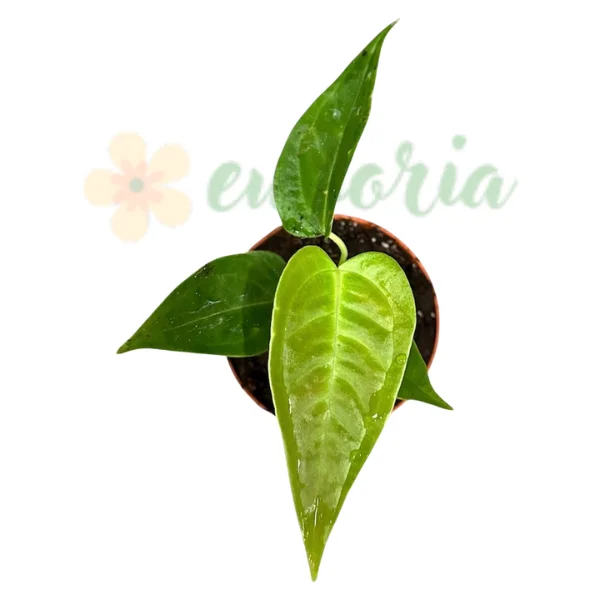
![Anthurium balaoanum — pendant lanceolate green leaves with whitish vein, Ø6cm pot Eufloria [1]](https://gomagcdn.ro/domains2/eufloria.ro/files/product/original/anthurium-balaoanum-890277.png "Anthurium balaoanum — pendant lanceolate green leaves with whitish vein, Ø6cm pot Eufloria [1]")
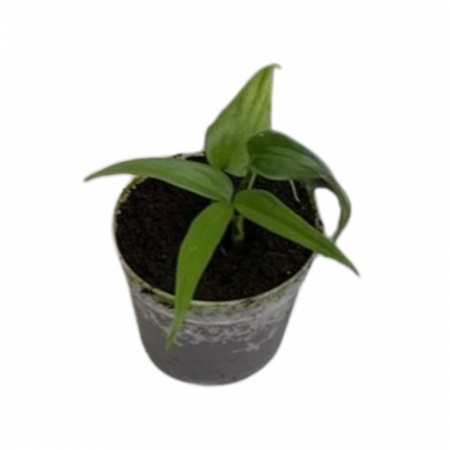
![Anthurium balaoanum — pendant lanceolate green leaves with whitish vein, Ø6cm pot Eufloria [2]](https://gomagcdn.ro/domains2/eufloria.ro/files/product/original/planta-naturala-de-interior-anthurium-balaoanum-d6-220815.png "Anthurium balaoanum — pendant lanceolate green leaves with whitish vein, Ø6cm pot Eufloria [2]")
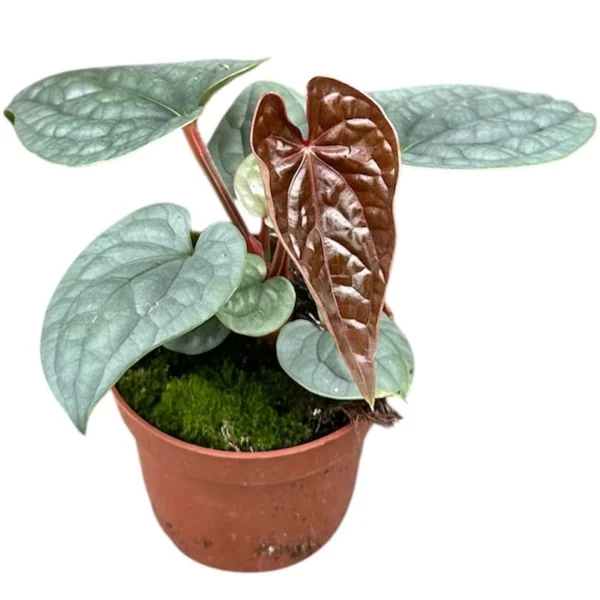
Anthurium balaoanum — rare Ecuadorian species with long pendant lanceolate leaves (30-60 cm), intense green with whitish central vein. Hemiepiphytic cascade plant for hanging pots. Humidity 70-90% (very demanding), indirect light, 20-28°C. Distinctive plant for advanced collectors.
Approx height (including pot): 20 cm
Pot diameter: 6 cm
- Description
- Characteristics
- Reviews (0)
- FAQ
🌿 Anthurium balaoanum — the elegant cascade of Ecuadorian forests
Anthurium balaoanum is one of the most spectacular Anthurium species, known for its long, slender and pendant leaves of intense green with slight silvery reflections. This rare species, endemic to Ecuador, naturally grows as a hemiepiphytic plant in humid tropical forests, clinging to tree trunks and letting the leaves hang in cascades under their weight, creating an elegant and dramatic botanical effect.
Its lanceolate leaves, often 40-60 cm long at maturity, are thin and slender, with a very pronounced central vein and fine lateral veins that trace an elegant graphic pattern. The texture is semi-leathery, and the surface shows a slight velvety shine that catches light refinedly. The plant develops thick stems and long petioles that support the pendant leaves.
Anthurium balaoanum is the perfect choice for experienced collectors looking for a distinctive Anthurium with the unique silhouette of a cascade plant. Suitable for both hanging pots and high windowsills where the leaves can hang freely, it brings into the home an authentic fragment of Ecuadorian tropical forests.
🌍 Botanical origin and history
Anthurium balaoanum is a species endemic to Ecuador, discovered and described in the 20th century by American botanists Thomas B. Croat and other specialists in the Araceae family. The species name "balaoanum" comes from Balao, a coastal region in Ecuador where the species was first collected.
The Araceae family, to which the Anthurium genus belongs, comprises over 3,700 species distributed predominantly in tropical areas. The Anthurium genus includes approximately 1,000 species native to Central and South America, varied in form and habitat — from epiphytic plants with large leaves to cascading hemiepiphytes like A. balaoanum.
In its Ecuadorian natural habitat, Anthurium balaoanum grows in humid tropical forests from the foothills of the Andes to the Pacific coast, at altitudes between 100-1,500 meters. Here, atmospheric humidity exceeds 80%, and light filtered through the dense canopy of trees creates a gentle microclimate. The plant develops as a hemiepiphyte, beginning life on the ground and then climbing up the trunks of old trees.
🌱 The pendant foliage
The foliage of Anthurium balaoanum is its unique visual signature. The leaves are lanceolate (lance-shaped), 30-60 cm long and only 5-10 cm wide, with a length/width ratio that makes them hang elegantly under their own weight. The texture is semi-leathery, and the color is an intense green with subtle lighter reflections on the central vein and more silvery on the surface.
The central vein is very pronounced, almost whitish, tracing a graphic line that contrasts elegantly with the intense green of the rest of the leaf. The lateral veins are fine and parallel to the leaf edge, adding subtle texture. The leaf tip is sharp, and the base is cordate or slightly lobed, where it connects with the long petiole.
The petioles are thin and relatively long, supporting the leaves that hang gracefully towards the ground. A mature plant develops 10-20 leaves simultaneously, creating a dense and elegant cascade of green that fits perfectly in hanging pots or on high windowsills.
🌸 The flowers
Anthurium balaoanum produces flowers typical of the Araceae family — a cylindrical spadix of small flowers (the true flowers), surrounded by a spathe (modified leaf, or "showy flower"). The spathe is cream-green or yellowish-green, elongated, almost lanceolate, not showy like common ornamental Anthuriums.
Flowers appear rarely in indoor culture, only on very mature plants under optimal light and humidity conditions. They are not fragrant and are not the main attraction of this species — the beauty lies exclusively in the spectacular cascade foliage.
For growers, the absence of flowers is not a loss — this species is appreciated for its elegant foliage, and any floral appearance is considered a beautiful bonus. Natural pollination is carried out by insects specialized in the natural habitat, but this system does not reproduce in apartment culture.
🌱 Growth habit and care
Anthurium balaoanum is a moderately demanding plant, suitable for collectors with some experience in aroids. Growth is medium, with new leaves every 4-6 weeks during the growing season. The plant is hemiepiphytic, so it BENEFITS from a vertical support or moss pole for full potential development.
Essential requirements:
- Light: bright indirect light — essential for developing long and healthy leaves. East or south-east facing windowsill. Avoid direct sun.
- Temperature: 20-28°C optimal; does not tolerate below 15°C. Sensitive to cold drafts.
- Watering: moderate — when the top 2-3 cm of substrate has dried. Every 5-7 days in summer, every 10-14 days in winter. Water abundantly, remove excess.
- Humidity: 70-90% ideal — this species is very demanding with humidity. Humidifier essential or placement in a terrarium.
- Substrate: very well-drained and airy — aroid mix (bark + perlite + sphagnum + activated charcoal). Roots are epiphytic.
- Fertilization: every 3-4 weeks during growing season with balanced fertilizer diluted to one quarter (weaker than normal).
- Propagation: by division at repotting or stem cuttings with aerial roots.
🌿 Why choose Anthurium balaoanum
It is an exceptional choice for collectors looking for rare Anthurium species with the unique silhouette of a cascade plant. Perfect for hanging pots or for high areas of the home, the long pendant leaves create a dramatic and elegant botanical effect. With careful attention to humidity, this rare Ecuadorian species will reward care with increasingly impressive foliage.
Lungime: 15 cm
Greutate (kg): 0.25 Kg
Denumire: Anthurium
Cerințe lumină: Partial umbra
Tip plantă: Decorative
Utilizare: Interior
Tip suport: Ghiveci
Material Suport: Plastic
Why does Anthurium balaoanum have such long leaves?
The long and narrow leaves are an adaptation to the natural hemiepiphytic habitat. In the Ecuadorian tropical forest, the plant hangs from tree trunks, and the lanceolate leaves maximize the surface area exposed to filtered light, flowing down to capture atmospheric moisture.
Why does it need such high humidity?
Anthurium balaoanum grows naturally in tropical forests with atmospheric humidity above 80%. The thin leaves and epiphytic roots are adapted to constant humid environment. At humidity below 60%, leaves show dry edges, fall and the plant may die. A terrarium is ideal for cultivation.
How to water Anthurium balaoanum correctly?
Water moderately, when the top 2-3 cm of substrate has dried (check with finger). Approximately every 5-7 days in summer, every 10-14 days in winter. Water abundantly until water drains through, then remove excess. Epiphytic roots do not tolerate standing water.
Is Anthurium balaoanum toxic?
Yes, all Anthuriums contain insoluble calcium oxalate crystals that are toxic to cats, dogs and humans. Ingestion causes severe oral irritation, drooling, difficulty swallowing and vomiting. Place in an area inaccessible to pets and young children.
How is Anthurium balaoanum propagated?
By division at repotting (the safest method) or stem cuttings with aerial roots. Cut a portion of stem with at least 1-2 aerial roots, root in moist aroid substrate with high humidity (80%+). Spring-summer are the ideal periods.
Ai nevoie și de un ghiveci decorativ?