EN/
EN/ Romana
Biophytum sensitivum Ø9cm
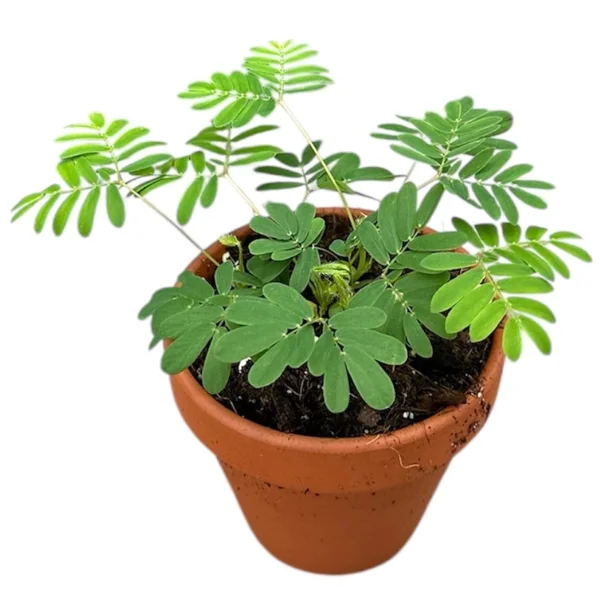
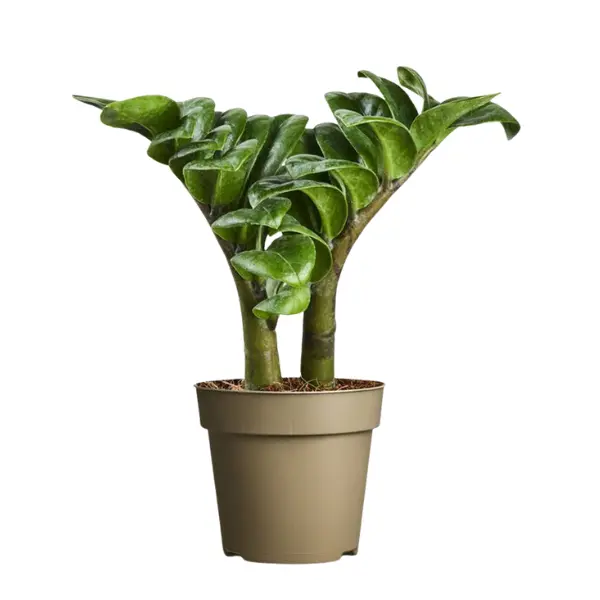
![Biophytum sensitivum — miniature tropical plant with short upright trunk and compound palmate green leaves that reactively close when touched, sensitive mini palm [1]](https://gomagcdn.ro/domains2/eufloria.ro/files/product/original/biophytum-sensitivum-593340.png "Biophytum sensitivum — miniature tropical plant with short upright trunk and compound palmate green leaves that reactively close when touched, sensitive mini palm [1]")
Biophytum sensitivum is a fascinating tropical plant from the Oxalidaceae family, known as the 'sensitive mini palm'. Its compound leaves close reactively when touched (thigmonasty), offering a living spectacle. Short upright trunk with palmate leaves, yellow flowers. Native to Asia and Africa, a unique plant for collectors and interactive botanical experiences with children.
Approx height (including pot): 15 cm
Flowering state: No flowers
Country of origin: Netherlands
Pot diameter: 9 cm
- Description
- Characteristics
- Reviews (0)
- FAQ
🌿 Biophytum sensitivum — The Sensitive Miniature of the Tropics
Biophytum sensitivum is a small and fascinating tropical plant, popularly known as "sensitive mini palm" or "little tree plant", due to its delicate leaves that reactively close when touched. This unusual trait, called thigmonasty, makes Biophytum a living spectacle — every touch triggers a visible movement, as if the plant had its own sensory life. It is a plant that fascinates both children and adults, offering a moment of direct connection with plant biology.
The plant's silhouette recalls a miniature palm tree, with a short, upright trunk from which the compound leaves unfurl in a radial crown. Each leaf is made up of 10–20 small, oval leaflets, arranged symmetrically on either side of the central axis. When touched, the leaf folds progressively, starting from the tip, and closes completely within a few seconds — an evolutionary mechanism that protects it from small herbivores and strong mechanical wind movements.
At the offered size — Ø9cm pot — the plant is young-mature, with 3–5 formed leaves and a visible trunk. It is perfect for windowsills, desks or as a workshop plant for interactive botanical experiences. Children love it for the touch reaction, and adults appreciate its uniqueness in botanical collections.
🌍 Origin and Botanical History
Biophytum sensitivum belongs to the Oxalidaceae family, the same that includes oxalis and starfruit (Averrhoa carambola). It is native to the tropical and subtropical regions of Southeast Asia (India, Sri Lanka, Thailand, Indonesia) and Africa, where it grows in wet forests, along waterways or in areas with fertile soil and bright shade.
The Biophytum genus was established in 1825 by the Austrian botanist Augustin Pyramus de Candolle. The genus name derives from Ancient Greek: bios ("life") and phyton ("plant") — a likely reference to its apparently "living" behavior through reactive movements. The epithet sensitivum emphasizes this essential characteristic — sensitivity to touch.
In cultivation, Biophytum sensitivum is a short-lived perennial plant, usually living 2–4 years. It self-seeds easily, with seeds being explosively expelled from mature capsules, and can form small colonies if grown in optimal conditions.
🌱 The Foliage and Reactive Movement
The leaves are compound, with 10–20 small leaflets (0.5–1 cm each), arranged in symmetrical palms on a central axis. Color is fresh, bright green, with a fine and delicate texture. The leaves start from the top of the short trunk, creating an elegant radial crown that indeed resembles a miniature palm.
The reactive movement arises from two mechanisms: thigmonasty (reaction to touch) and nyctinasty (closing of leaves at night). When touched, the leaves fold within a few seconds, starting from the tip toward the base. Recovery is slow, in 10–30 minutes, depending on light and temperature. At night, the plant folds all its leaves in a characteristic "plant sleep".
This behavior is due to specialized cells called pulvini, located at the base of each leaflet. Touching triggers a rapid movement of ions and water in these cells, causing loss of turgor and closing of leaves. It is one of the fastest movement mechanisms in the plant world.
🌸 The Flowers
Biophytum sensitivum produces small, yellow, five-petaled flowers, grouped in umbellate inflorescences at the tip of flower stalks that rise above the leaf crown. Flowers appear throughout the year in optimal conditions, followed by green capsules that, at maturity, expel seeds with explosive force — a dispersal mechanism that can scatter seeds 1–2 meters away.
🌱 Growth Habit and Care
Biophytum sensitivum is an easy-care plant if its specific requirements are respected. It grows compact, reaching 15–25 cm in height in indoor cultivation.
- Light: bright indirect; avoid direct midday sun which can burn delicate leaves. East-facing windowsill ideal.
- Temperature: 20–28°C optimal; does not tolerate below 15°C. Authentic tropical plant.
- Watering: regular; keep the substrate slightly moist but not soggy. Every 3–5 days in summer, every 7–10 days in winter. Avoid complete substrate drying.
- Humidity: 60–80% ideal; daily misting beneficial. Pebble tray with water under the pot helps.
- Substrate: airy, slightly acidic, humus-rich — mix for ferns/tropical plants with coconut fiber, perlite and peat.
- Fertilization: every 2–3 weeks during the growing season, with liquid fertilizer for indoor plants diluted by half.
- Propagation: via seeds (from own plants or purchased); natural self-seeding in the pot.
🌿 Safety and Non-toxicity
Biophytum sensitivum is considered non-toxic for humans and pets. However, like any ornamental plant, ingestion of large amounts may cause minor gastric discomfort. It is safe in homes with cats, dogs or curious children, and the experience of "playing" with its reactive leaves is completely harmless.
🌸 Why Choose Biophytum sensitivum
Biophytum sensitivum is the perfect plant for those fascinated by interactive plant behavior. It is an excellent educational choice for children, who can learn about plant movement and adaptations, a conversation piece for guests (who doesn't remain surprised by a plant that reacts to touch?), and a unique specimen for collectors who appreciate tropical rarities. Plus, it is a relatively affordable plant with care requirements that fit into the usual indoor plant routine.
🌱 The Difference Between Biophytum and Mimosa pudica
Many confuse Biophytum sensitivum with Mimosa pudica (sensitive mimosa), both being plants that react to touch. The differences are clear: Biophytum has an upright, short trunk, with compound leaves arranged in a palmate crown, resembling a palm tree; Mimosa has long, branched stems, with much airier bipinnate (doubly pinnate) leaves. Biophytum flowers are yellow, Mimosa's are pink-mauve. Care requirements are similar, but Biophytum tolerates humidity more easily, and Mimosa needs more direct light.
Propagation and Cultivation
Biophytum sensitivum propagates readily from seed, which it produces abundantly under favorable conditions. Seeds are ejected from dried capsules and germinate quickly in warm, moist conditions. This self-seeding habit makes it easy to maintain a continuous collection: sow fresh seeds on the surface of a well-draining, consistently moist substrate and keep at 22-26°C with bright indirect light. Germination typically occurs within 1-3 weeks, and seedlings develop their first touch-sensitive leaves within a month.
For collectors who want to preserve specific forms, stem cuttings are also possible, though less common due to the plant's readiness to self-seed. Harvest mature seeds when capsules turn brown and begin to crack open. Store seeds in a cool, dry place for up to a year without significant loss of viability.
Lungime: 10 cm
Greutate (kg): 0.25 Kg
Denumire: Biophytum
Diametru: 9 cm
Cerințe lumină: Partial umbra
Tip plantă: Decorative
Utilizare: Interior
Tip suport: Ghiveci
Material Suport: Ceramica
Why do the leaves close when touched?
The phenomenon is called thigmonasty — a rapid reactive movement triggered by specialized cells (pulvini) at the base of the leaflets. When touched, these cells lose turgor, causing the leaves to close within a few seconds. It is a defensive mechanism against small herbivores and strong wind. Recovery takes 10–30 minutes.
Is Biophytum suitable for children?
Yes! Biophytum sensitivum is an excellent educational choice for children. The leaves' reaction to touch offers a fascinating moment of connection with plant biology, and the plant is completely non-toxic. Children can 'play' with the leaves risk-free — a safe and memorable sensory experience.
How often should it be watered?
Watering is regular. Keep the substrate slightly moist but not soggy. Every 3–5 days in summer, every 7–10 days in winter. Unlike Hoyas, Biophytum does not tolerate complete substrate drying — the delicate leaves can quickly be lost to prolonged dehydration.
How to propagate?
Via seeds. Biophytum self-seeds easily — matured capsules expel seeds with explosive force, 1–2 meters away. Collect seeds before expulsion or let the plant multiply naturally in neighboring pots. Germination is quick (1–2 weeks with humidity and warmth).
How long does the plant live?
Biophytum sensitivum is a short-lived perennial, living 2–4 years in optimal conditions. However, frequent self-seeding ensures continuous succession — even if the mother plant dies, the offspring continue in the same pots, perpetuating the colony.
Ai nevoie și de un ghiveci decorativ?