EN/
EN/ Romana
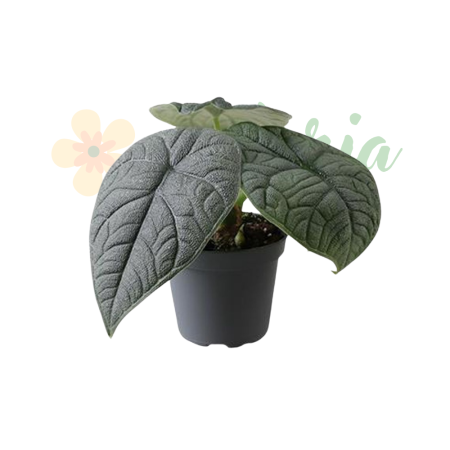
Alocasia infernalis 'Black Magic' D10.5
![Alocasia Infernalis 'Black Magic' [0]](https://gomagcdn.ro/domains2/eufloria.ro/files/product/medium/alocasia-infernalis-black-magic-441070.png "Alocasia Infernalis 'Black Magic' [0]")
![Alocasia Infernalis 'Black Magic' [1]](https://gomagcdn.ro/domains2/eufloria.ro/files/product/medium/alocasia-infernalis-black-magic-637556.png "Alocasia Infernalis 'Black Magic' [1]")
![Alocasia Infernalis 'Black Magic' [1]](https://gomagcdn.ro/domains2/eufloria.ro/files/product/original/alocasia-infernalis-black-magic-441070.png "Alocasia Infernalis 'Black Magic' [1]")
![Alocasia Infernalis 'Black Magic' [2]](https://gomagcdn.ro/domains2/eufloria.ro/files/product/original/alocasia-infernalis-black-magic-637556.png "Alocasia Infernalis 'Black Magic' [2]")
Alocasia infernalis 'Black Magic' is a premium jewel Alocasia from Borneo featuring extraordinary metallic foliage that transitions from violet-purple to lustrous near-black. This compact collector's specimen (30-75 cm) displays a mysterious red iridescence under certain light. Named from Latin for "hellish" due to its dark coloration. Thrives in bright indirect light and high humidity. A true collector's treasure for those seeking rare, dramatically dark tropical plants.
Note: Product images are for guidance only. Due to different batches of imported products, there may be differences between the images on the website and the actual appearance of the products.
Approx height (including pot): 30 cm
Flowering state: No flowers
- Description
- Characteristics
- Reviews (0)
- FAQ
Alocasia infernalis 'Black Magic' is perhaps the most striking and horticulturally significant jewel Alocasia discovered in the rainforests of Borneo. First described by botanist P.C. Boyce in 2007 from specimens collected in the Kapit Division of Sarawak, Malaysian Borneo, this extraordinary species has captured the imagination of plant collectors worldwide with its remarkable, almost otherworldly foliage that transitions from metallic violet-purple in juvenile plants to a lustrous, deep purple-black at maturity.
The species name infernalis derives from the Latin word meaning "hellish" – a fanciful allusion to the remarkable deep purple-black coloration of mature leaves. This evocative naming was inspired by the equally remarkable vampyromorphoid cephalopod Vampyroteuthis infernalis (vampire squid), drawing a parallel between two darkly beautiful creatures from vastly different realms of the natural world.
Distinctive Characteristics:
- Extraordinary Foliage: The leaves of Alocasia infernalis 'Black Magic' are nothing short of mesmerizing. Arrow-shaped to slightly heart-shaped, they display a glossy, almost metallic sheen that shimmers between violet-purple and near-black depending on the angle of light. Young leaves emerge with a stunning metallic purple iridescence, gradually darkening to an almost mirror-like black as they mature.
- Iridescent Surface: One of the most captivating features is the baleful red iridescence that appears on the leaf surface under certain lighting conditions – a phenomenon unique among Bornean Alocasia species and one that adds to the plant's mysterious, almost mystical appeal.
- Purple Undersides: The contrast between the dark upper surface and the purple-tinted undersides of the leaves creates additional visual depth and interest.
- Compact Growth Habit: Unlike larger Alocasia species, 'Black Magic' maintains a dwarf, upright form typically reaching 30-75 cm (12-30 inches) in height under indoor conditions. This compact stature makes it ideal for smaller spaces, terrariums, and curated plant displays.
- Clustered Petioles: The thick, clustered stems add to the plant's architectural quality and sculptural appeal.
Natural Habitat and Origin:
In the wild, Alocasia infernalis grows in the valley bottoms of moist to ever-wet lowland forests in the Sungai Gaat watershed of Sarawak's Kapit Division. Here, it thrives in deep leaf litter covering red sandstone-derived clay-loam soils, in heavy shade at elevations of approximately 182-249 meters. The species is endemic to Borneo, specifically known from Sarawak (Malaysian Borneo) and Kalimantan (Indonesian Borneo), where it grows in the humid understory beneath the towering rainforest canopy.
Understanding this natural habitat is key to successful cultivation: 'Black Magic' has evolved in conditions of constant warmth, high humidity, filtered light, and consistently moist but well-draining soil – conditions that can be successfully recreated in home environments with proper attention to care.
Care Requirements:
- Light: Bright, indirect light is essential to preserve the metallic sheen and deep coloration. Avoid direct midday sun, which can scorch the delicate leaves. Morning or late evening sun is tolerable. In shadier conditions, the plant may survive but growth will slow and the characteristic coloring may become less intense. One to two hours of gentle winter sunlight can be beneficial.
- Water: Keep soil evenly moist but never soggy – water when the top 20% of the soil feels dry. Little and often is the ideal approach. Overwatering leads to root rot; underwatering causes leaf drop and crispy edges. Like many Alocasia, 'Black Magic' is sensitive to water quality – use filtered water, rainwater, or tap water left overnight to allow chlorine to dissipate.
- Humidity: High humidity is crucial, ideally 60-80%. This Bornean species thrives in humid conditions reminiscent of its rainforest origins. Place near humidifiers, in naturally humid rooms (bathrooms, kitchens), or group with other tropical plants to create a humid microclimate. Regular misting helps but doesn't replace sustained ambient humidity.
- Temperature: Prefers warm temperatures between 20-28°C (68-82°F). Protect from temperatures below 15°C (59°F) and sudden temperature drops or cold drafts, which can cause stress, leaf drop, and dormancy.
- Soil: Use a well-draining substrate rich in natural matter with excellent aeration. A mix containing orchid bark, perlite, coco coir, and sphagnum moss works well. The soil should retain moisture while allowing oxygen flow to the roots – mimicking the leaf-litter-rich forest floor of its native habitat.
- Fertilizing: Apply diluted balanced liquid fertilizer every 4-6 weeks during the active growing season (spring through summer). Reduce or stop fertilization during cooler months when growth naturally slows.
- Repotting: Refresh substrate every 1-2 years or when roots fill the pot. Always ensure proper drainage. Handle with care as Alocasia can be sensitive to root disturbance.
Botanical Classification:
- Scientific Name: Alocasia infernalis P.C.Boyce 'Black Magic'
- Family: Araceae (Aroid family)
- Common Names: Black Magic Alocasia, Black Magic Elephant Ear, Dark Alocasia, Infernalis
- Type: Chamaephyte (bulb/corm-forming perennial)
- Native Range: Borneo (Sarawak, Malaysia and Kalimantan, Indonesia)
- Habitat: Lowland tropical rainforest understory
- Growth Habit: Dwarf, upright, compact
- Mature Size: 30-75 cm height; 30-100 cm spread
- Hardiness Zone: USDA 12-13 (indoor cultivation in temperate climates)
- Toxicity: Toxic to humans and pets – contains calcium oxalate crystals
Collector's Note: Alocasia infernalis 'Black Magic' was among the species included in a joint tissue culture project between Malesiana Tropicals and UNIMAS (Universiti Malaysia Sarawak), funded under MOSTI-IGS. This has made the species more available to collectors than its extremely limited natural distribution would otherwise allow, though it remains a prized rarity in the houseplant world.
Lungime: 8 cm
Greutate (kg): 0.25 Kg
Denumire: Alocasia
Diametru: 8 cm
Cerințe lumină: Strong, indirect light
Tip plantă: Decorative
Utilizare: Interior
Tip suport: Ghiveci
Material Suport: Plastic
What is Alocasia infernalis 'Black Magic' and why is it called "infernalis"?
What makes Alocasia infernalis 'Black Magic' different from other black-leaved plants?
Is Alocasia infernalis 'Black Magic' toxic to cats, dogs, and humans?
How much light does Alocasia infernalis 'Black Magic' need?
How do I water Alocasia infernalis 'Black Magic' correctly?
What humidity level does Alocasia infernalis 'Black Magic' require?
Why are my Alocasia infernalis 'Black Magic' leaves turning yellow?
Where does Alocasia infernalis 'Black Magic' come from?
How big does Alocasia infernalis 'Black Magic' grow indoors?
Does Alocasia infernalis 'Black Magic' go dormant?
How do I propagate Alocasia infernalis 'Black Magic'?
What soil mix is best for Alocasia infernalis 'Black Magic'?
Is Alocasia infernalis 'Black Magic' suitable for beginners?
Recommendations
Ai nevoie și de un ghiveci decorativ?